Many people pause when they see the words aye and nay. At first, they look old. However, they still appear in votes, meetings, and news reports. Therefore, confusion happens fast. Some readers think they are slang. Others think they mean yes and no in all cases. As a result, mistakes appear in writing, exams, and even formal documents.
Moreover, beginners and non-native speakers struggle more. They often ask one question: Are “aye” and “nay” the same as “yes” and “no”? Meanwhile, writers wonder if these words fit modern English. Because of this doubt, many people avoid them completely.
This article solves that problem clearly. First, it explains what aye or nay really means. Then, it shows where each word fits best. Additionally, it explains common errors people make. After that, you will see real-life examples. Finally, you will learn one simple rule that removes all confusion. Overall, this guide helps you choose the right word with confidence.
For usage clarity, the word comparison hub provides helpful context.
Aye or Nay – Quick Answer
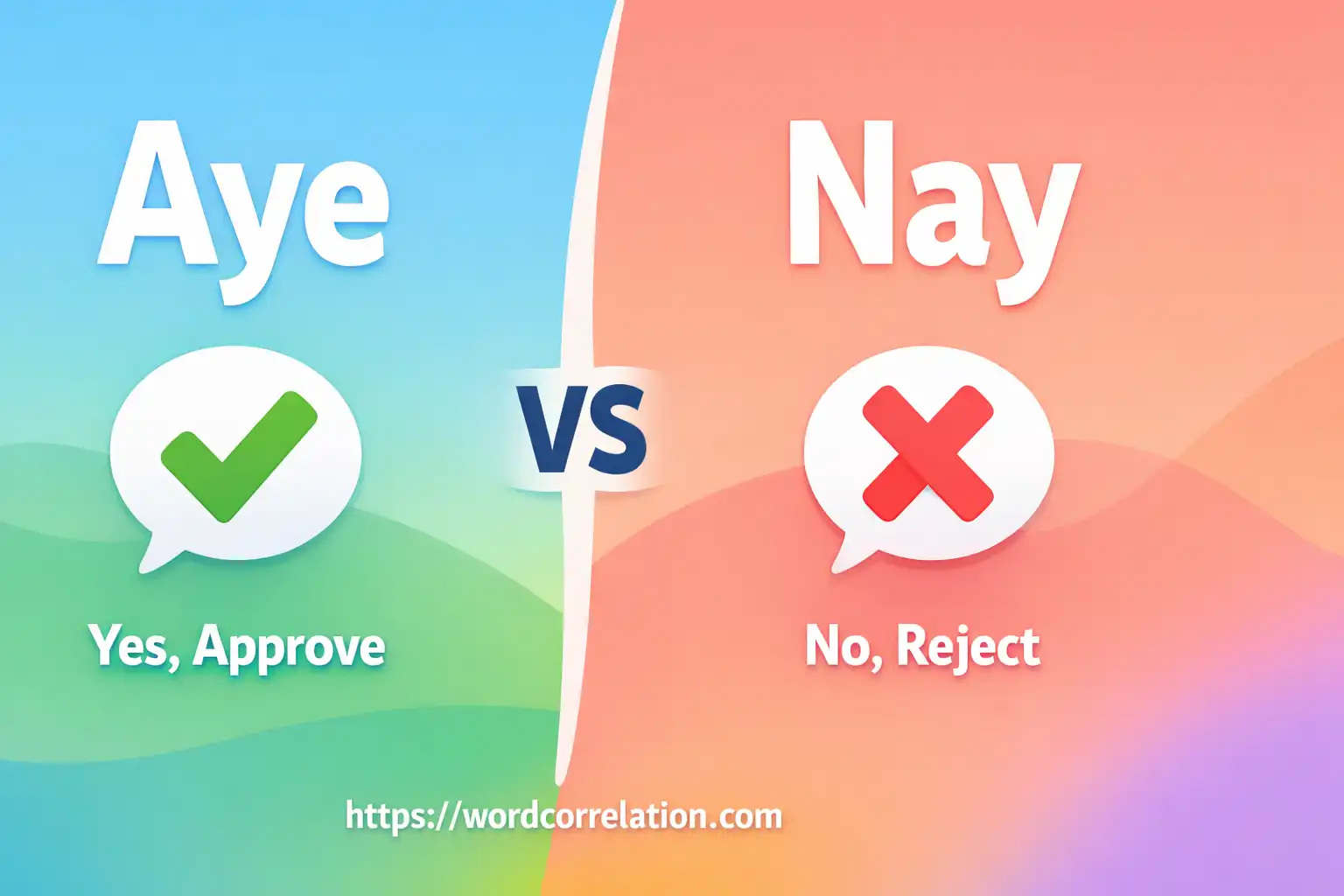
- Aye means yes
- Nay means no
- They appear mostly in votes and formal decisions
Example:
- “All in favor say aye.”
- “Those against say nay.”
The Origin of Aye or Nay
The words aye and nay come from Old English and Old Norse. Long ago, people used them in councils and public meetings. At that time, spoken votes mattered more than written ones. Therefore, clear sounds helped listeners understand quickly.
However, language changed over time. People began using yes and no in daily speech. Meanwhile, aye and nay stayed in formal settings. Because of this shift, modern readers feel unsure.
Moreover, spelling adds confusion. Some people mix aye with I or eye. Others think nay looks strange. As a result, learners often avoid these words even when they are correct.
This belongs in our meaning usage pillar for formal responses.
British English vs American English Spelling
Both British and American English use aye and nay. However, their frequency differs.
In British English, aye sometimes appears in regional speech, especially in Scotland. In contrast, American English limits both words mostly to voting contexts.
Comparison Table
| Feature | British English | American English |
| Everyday use | Rare but regional | Very rare |
| Voting use | Common | Common |
| Informal speech | Sometimes | Almost never |
Therefore, context matters more than location.
Which Spelling Should You Use?
Your audience decides your choice.
For a US audience, use aye or nay only in formal votes. Otherwise, use yes or no.
For a UK or Commonwealth audience, aye may appear in cultural or regional writing. However, formal rules still apply.
For global or professional writing, use aye or nay only when discussing decisions, motions, or historical context.
In short, clarity comes first. If the setting feels casual, avoid these words.
Common Mistakes with Aye or Nay
Many errors repeat again and again.
❌ I will aye help you.
✅ I will always help you.
❌ She said aye to the party invitation.
✅ She said yes to the party invitation.
❌ He gave an aye opinion.
✅ He voted aye.
The biggest mistake happens when people treat aye as a replacement for yes in daily talk. However, that usage sounds unnatural.
Aye or Nay in Everyday Examples
Emails:
- “Please vote aye or nay before Friday.”
News:
- “The council passed the motion with more ayes than nays.”
Social Media:
- “Quick poll: Aye or nay on remote work?”
Professional Writing:
- “Members responded with a clear aye during the vote.”
Each example shows structure and formality. Therefore, tone always guides usage.
Aye or Nay – Google Trends & Usage Data
Search interest for aye or nay rises during elections, meetings, and debates. Students often search it for exams. Meanwhile, writers check it for accuracy.
- Countries: US, UK, Canada
- User types: Students, journalists, ESL learners
- Mistakes: Using it in casual chat
Correct usage stays narrow but strong. As a result, understanding context prevents errors.
A similar usage choice appears in anyone or anybody.
Aye or Nay Comparison Table
| Aspect | Aye | Nay |
| Meaning | Yes | No |
| Part of speech | Adverb | Adverb |
| Context | Voting, decisions | Voting, decisions |
| Formality | Formal | Formal |
| Common mistake | Used as “always” | Used casually |
| Correct example | “All say aye.” | “Those opposed say nay.” |
This table removes doubt instantly.
Semantic FAQs (People Also Ask)
Is aye the same as yes?
No. It means yes only in formal votes.
Is nay the same as no?
Yes, but only in decision settings.
Can aye or nay be casual?
No. Casual use sounds incorrect.
Why do people confuse aye?
It looks like I or eye.
Is there a British vs American difference?
Usage is similar. Context matters more.
Can grammar tools catch this error?
Sometimes. However, understanding helps more.
Conclusion
Overall, aye or nay has a clear purpose. It belongs to voting, decisions, and formal responses. However, it does not replace yes or no in daily speech. Because of this rule, many mistakes disappear. Context also matters in well or good.
In short, always check context first. If people vote or decide, aye or nay works well. If people chat, write emails, or talk casually, avoid it. Moreover, never use aye to mean always. That error appears often.
Finally, remember one easy rule: Use “aye or nay” only when a choice becomes official.

Jonathan Swift is a writer whose work reflects sustained attention to language precision, meaning, and the practical effects of word choice. Trained in classical studies and theology, he develops a disciplined approach to writing that combines close textual analysis with a strong concern for clarity and accuracy. His essays, pamphlets, and satirical works show a consistent method: examining how words are used, misused, and reshaped to influence public understanding.
Swift’s writing demonstrates an early form of semantic analysis. He compares terms, exposes false equivalence, and highlights how subtle differences in wording alter meaning, intent, and interpretation. This analytical focus allows readers to see language not as decoration, but as a tool that shapes thought, policy, and belief.
By breaking down complex expressions into their functional parts, Swift helps readers distinguish between surface language and underlying meaning. His work remains valuable to audiences interested in word comparison, rhetoric, and the responsible use of language. Across genres, his reputation rests on careful reasoning, linguistic discipline, and a consistent commitment to helping readers read more critically and precisely.