Many people search for proof or prove because these two words look close. However, they work in very different ways. As a result, learners, students, and even professionals often mix them up. This mistake happens in emails, exams, and formal writing. Moreover, grammar tools do not always explain why one choice is wrong. Therefore, confusion stays.
In contrast, this article removes that confusion step by step. First, it explains what each word really means. Next, it shows where people usually make errors. Additionally, it explains British and American usage clearly. Meanwhile, you will see simple examples from daily life. As a result, you will know exactly which word to use and when.
Overall, this guide solves one clear problem. It helps you choose proof or prove with confidence. Finally, you will learn one easy rule that works every time.
Noun and verb differences are clarified in the word comparison hub.
Proof or Prove – Quick Answer
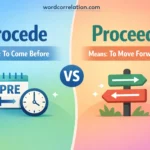
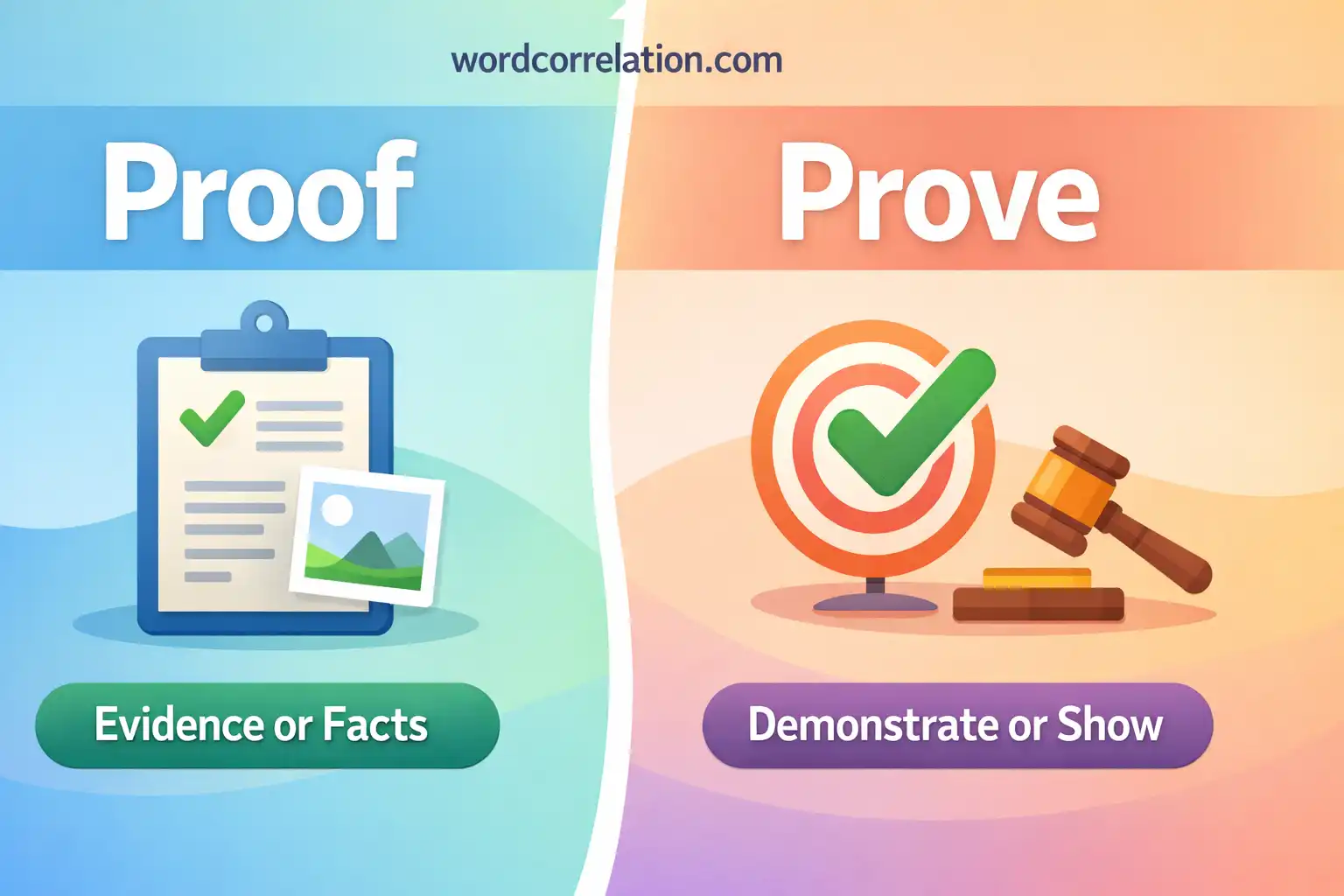
Proof is a noun. It means evidence or facts.
Prove is a verb. It means to show something is true.
- Proof: She has proof of payment.
- Prove: She can prove she paid.
The Origin of Proof or Prove
The words proof and prove come from old French and Latin. Originally, both words meant “to test.” However, English changed their roles over time.
Proof became a thing you can see or show. In contrast, prove became an action you do. Therefore, the confusion started because both words share the same root. Moreover, they sound similar. As a result, learners often think they work the same way.
This pair belongs under our meaning usage pillar.
British English vs American English Spelling
There is no spelling difference between British and American English for proof or prove. However, usage mistakes still appear.
| Aspect | Proof | Prove |
| Word type | Noun | Verb |
| Action | No | Yes |
| Example | Proof of ID | Prove your ID |
In contrast, spelling stays the same worldwide. Whereas confusion comes from grammar, not region.
Which Spelling Should You Use?
The choice depends on how you use the word in a sentence.
For US English:
Use proof for evidence. Use prove for action.
For UK and Commonwealth English:
The same rule applies. Therefore, no change is needed.
For global or professional writing:
Follow grammar role, not sound. As a result, your writing stays clear.
Common Mistakes with Proof or Prove
Many errors follow the same pattern. However, they are easy to fix.
❌ She gave prove of payment.
✅ She gave proof of payment.
❌ This photo is a prove.
✅ This photo is proof.
Overall, mistakes happen when people forget noun vs verb roles.
Proof or Prove in Everyday Examples
Emails:
- Please send proof of address.
- Please prove your identity.
News:
- Police found proof at the scene.
- Data can prove the claim.
Social Media:
- Show proof or it did not happen.
- This video proves the story.
Formal Writing:
- The study provides proof.
- The results prove the theory.
Proof or Prove – Google Trends & Usage Data
Search data shows high interest in proof or prove among learners. Moreover, students and ESL users search this topic often.
By country:
- High searches in the US, UK, India, and Australia.
By user type:
- Students: grammar checks
- Writers: editing clarity
- ESL learners: word roles
- Professionals: formal accuracy
Correct usage grows with education. However, common mistakes still appear online. Another noun-versus-verb case is relieve or relief.
Comparison Table: Proof vs Prove
| Feature | Proof | Prove |
| Meaning | Evidence or facts | Show something is true |
| Part of speech | Noun | Verb |
| Context | Results, documents | Actions, arguments |
| Formal use | Very common | Very common |
| Common mistake | Used as verb | Used as noun |
| Correct example | Show proof. | Prove it works. |
This table removes confusion instantly.
Semantic FAQs (People Also Ask)
Is proof the same as prove?
No. Proof is a thing. Prove is an action.
Which one is correct in formal writing?
Both are correct when used in the right role.
Can they be used interchangeably?
No. Grammar rules do not allow that.
Why do people confuse them?
They sound similar and share history.
Can grammar tools catch this mistake?
Sometimes. However, human understanding works better.
Is there a British vs American difference?
No. Usage rules stay the same.
Conclusion
Overall, proof or prove confusion comes from grammar roles. However, the fix is simple. Proof names evidence. Prove shows action. Therefore, always check what the word does in your sentence. If it names a thing, use proof. If it shows action, use prove. A similar form choice appears in apologizes or apologies.
Moreover, remember this one rule. You can prove something, but you show proof. As a result, your writing becomes clear and correct. Finally, apply this rule everywhere. Emails, exams, and professional documents will all improve.

Virginia Woolf is a British writer and essayist whose work centers on close reading, linguistic precision, and the careful examination of meaning. Her professional background spans fiction, literary criticism, and long-form essays, where attention to word choice and semantic nuance is central rather than decorative. Woolf approaches language as a system of relationships, treating individual words not as interchangeable units but as carriers of tone, context, and psychological weight.
Her research-based writing reflects sustained engagement with how meaning shifts across usage, rhythm, and narrative position. Through essays and critical studies, she demonstrates how subtle differences in wording shape interpretation, emotional response, and intellectual clarity. This focus aligns naturally with word comparison and semantic analysis, where accuracy matters more than flourish.
Woolf helps readers understand meaning differences by slowing language down, isolating terms, and examining how sense emerges through contrast. Her work builds trust by prioritizing clarity, textual evidence, and respect for the reader’s interpretive intelligence.