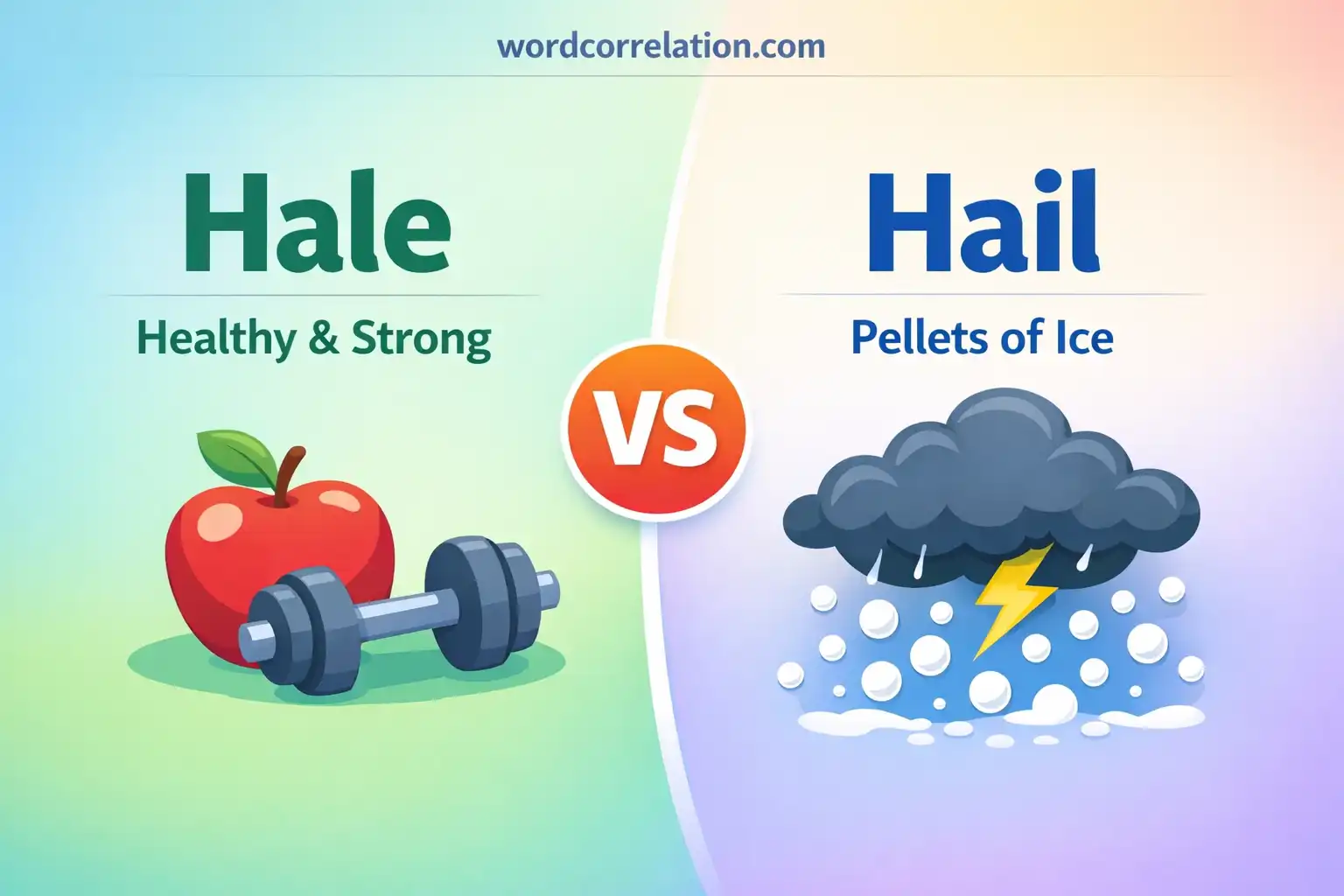
Many people stop when they write hale or hail. The words look alike. They sound alike. However, the meanings are very different. As a result, mistakes happen often in emails, school work, and online posts. This confusion frustrates students, writers, and English learners every day.
Moreover, spellcheck tools do not always help. They see both words as correct. Therefore, the error stays hidden. Meanwhile, readers notice the mistake fast. That can hurt clarity and trust.
This article solves that problem clearly. First, it explains what hale and hail mean in real life. Next, it shows where people go wrong and why. Then, it gives simple rules you can remember easily. Additionally, you will see examples from daily writing. Finally, you will learn which word to choose in any situation.
Overall, this guide uses very simple English. Short sentences keep ideas clear. Strong transitions connect every part. After reading, you will never confuse hale or hail again.
Meaning and sound differences are clarified in the word comparison hub.
Hale or Hail – Quick Answer
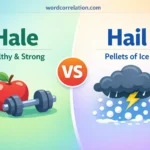
- Hale means healthy or strong.
- Hail means ice from the sky or to greet or praise.
Examples:
- She is hale after the illness.
- They hail the hero loudly.
The Origin of Hale or Hail
The word hale comes from Old English hāl. It meant whole and healthy. Over time, the meaning stayed the same. Therefore, hale still connects to health and strength.
In contrast, hail comes from Old English hagol. It described frozen rain. Later, people used it for greetings and praise. As a result, hail gained more meanings.
The confusion exists because both words sound the same. However, their roots are different. Moreover, their uses never overlap. Knowing the history helps you remember the difference clearly.
This pair fits in our word confusion pillar.
British English vs American English Spelling
There is no spelling difference between British and American English for hale or hail. However, usage still matters.
Key points:
- Both dialects use hale for health.
- Both dialects use hail for weather and praise.
Small Comparison Table:
| Aspect | Hale | Hail |
|---|---|---|
| Meaning | Healthy, strong | Ice or praise |
| US Usage | Same | Same |
| UK Usage | Same | Same |
In contrast to many English words, region does not change these spellings. Therefore, focus only on meaning.
Which Spelling Should You Use?
Choosing the right word depends on context. However, the rule stays simple.
For US writers:
Use hale for health. Use hail for weather or greetings.
For UK and Commonwealth writers:
The same rule applies. There is no variation.
For global or professional writing:
Always check meaning, not sound. Moreover, read the sentence aloud with meaning in mind.
Overall, audience location does not change the choice. Meaning always decides.
Common Mistakes with Hale or Hail
Many errors follow the same pattern. However, each mistake has an easy fix.
❌ He is hail and strong.
✅ He is hale and strong.
Explanation: Health needs hale.
❌ We hale the winners loudly.
✅ We hail the winners loudly.
Explanation: Praise needs hail.
❌ The storm dropped hale yesterday.
✅ The storm dropped hail yesterday.
Explanation: Weather uses hail.
As a result, checking meaning first prevents all errors.
Hale or Hail in Everyday Examples
Understanding daily use builds confidence. Therefore, see how each word fits real life.
Emails:
- I am hale and ready for work.
- We hail your quick response.
News:
- The athlete remains hale after surgery.
- Heavy hail damaged cars downtown.
Social Media:
- Feeling hale after my run today.
- Fans hail the singer online.
Formal Writing:
- The patient appears hale and stable.
- Critics hail the book as brilliant.
Meanwhile, notice how context guides the choice every time.
Hale or Hail – Google Trends & Usage Data
Search data shows strong interest in hale or hail. Many users type both words together. Therefore, confusion remains common.
By country:
- US and UK searches are equally high.
- ESL regions show growing interest.
By user type:
- Students search before exams.
- Writers check before publishing.
- ESL learners seek clear rules.
- Professionals verify formal use.
Correct usage vs mistakes:
Most searches come from fear of errors. As a result, clarity solves the problem instantly. Another sound-alike confusion is sole or soul.
Hale or Hail Comparison Table
| Feature | Hale | Hail |
|---|---|---|
| Meaning | Healthy or strong | Ice or praise |
| Part of Speech | Adjective | Noun or verb |
| Context of Use | Health, strength | Weather, greeting |
| Formal or Informal | Both | Both |
| Common Mistake | Used for praise | Used for health |
| Correct Example | A hale man | Hail the team |
This table removes confusion fast. Therefore, save it for quick checks.
Semantic FAQs (People Also Ask)
Is hale the same as hail?
No. Meanings differ completely.
Which one is correct in formal writing?
Both are correct when used properly.
Can they be used interchangeably?
No. Meaning never overlaps.
Why do people confuse them?
They sound the same.
Can grammar tools catch this mistake?
Often no. Both words are valid.
Is there a British vs American difference?
No difference at all.
How can I remember the rule?
Think hale = health.
Conclusion
Overall, hale or hail confusion is easy to fix. The problem comes from sound, not meaning. However, meaning always matters more. Hale connects to health and strength. Hail connects to weather and praise. Therefore, pause and check context before choosing. A similar pronunciation issue appears in patty or paddy.
Moreover, remember that region does not change spelling. US, UK, and global English follow the same rule. Additionally, common mistakes repeat often, so learning once helps forever.
In short, use hale when health appears. Use hail when ice falls or praise rises. Finally, follow one easy rule: If it relates to health, choose hale; otherwise, choose hail. That single rule prevents every error.

J.K. Rowling is a British author whose career centers on long-form narrative writing, editorial discipline, and sustained engagement with language at scale. Her professional background reflects years of structured research, drafting, and revision across fiction and nonfiction formats, with close attention to word choice, internal consistency, and reader interpretation.
Although best known for storytelling, Rowling’s published work shows a methodical approach to semantics—how individual words carry tone, implication, and contextual meaning. This sensitivity to language aligns naturally with research-based analysis of word differences, usage boundaries, and precision in expression. Her writing practice relies on clarity over ornament, favoring exact terms where meaning matters.
For readers interested in word comparison and meaning accuracy, her body of work offers a practical example of how careful language decisions shape understanding. The value lies not in authority claims, but in observable craft: disciplined editing, consistent terminology, and respect for reader comprehension. This emphasis supports trust, accuracy, and editorial responsibility—core expectations for informational content.