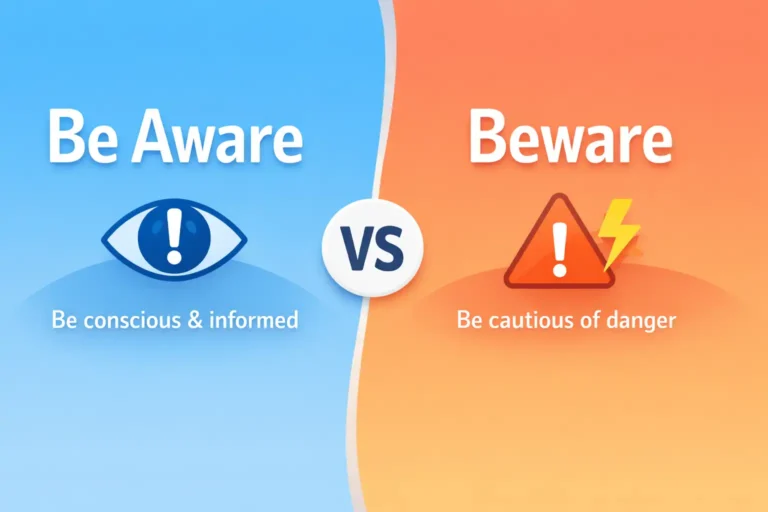
Many English learners stop when they see be aware and beware. Both look similar. Both talk about attention or danger. So people often think they mean the same thing.
However, they are not the same. One is a normal phrase used in daily speech. The other is a strong warning word. Because the spelling looks almost identical, writers often mix them up in emails, signs, and social media posts.
This confusion matters in real writing. For example, a company notice may say “Beware of the new policy.” That sounds strange. In contrast, a sign that says “Be aware of the dog” feels weak when a warning is needed.
So people search “be aware vs beware” to understand the real difference.
This guide explains everything in clear, simple English. You will learn the meaning of both expressions, where they came from, when to use them, and how to avoid common mistakes.
Be Aware vs Beware – Quick Answer
Be aware means to know about something or pay attention.
Beware means to be careful because something is dangerous.
Examples:
• Be aware of the meeting time change.
• Be aware that roads may close tonight.
• Beware of the dog.
• Beware of fake online offers.
Easy rule:
Use be aware for information. Use beware for warnings.
Meaning of Be Aware
Be aware is a phrase. It means to know, notice, or understand something.
People use it when they want someone to pay attention to information.
Common uses:
• sharing important details
• reminding someone about a fact
• making sure people notice something
Examples:
• Please be aware of the new office schedule.
• Travelers should be aware of local rules.
• Parents must be aware of online safety risks.
The tone is calm. It is not a strong warning.
Meaning of Beware
Beware is a single word. It means be careful because danger may exist.
It acts like a warning.
People use it on signs, alerts, and serious messages.
Examples:
• Beware of the dog.
• Beware of online scams.
• Beware when driving in heavy fog.
The tone is stronger. It signals possible risk or harm.
The Origin of Be Aware vs Beware
Understanding the history helps explain why these two expressions look similar but work differently.
Be aware comes from the word aware, which appeared in English around the 13th century. The term meant watchful or informed. Writers later added be to create the phrase be aware, meaning stay informed or conscious of something.
For example, early texts used sentences like:
“Be aware of the king’s command.”
Over time the phrase became common in instructions, notices, and communication.
Beware, however, has a different background. The word formed from be + ware, where ware once meant to guard or protect yourself. The phrase literally meant “be cautious”.
Old English warning signs often used the word:
“Beware the wolf.”
Eventually it became one word: beware.
So although both expressions contain be, their meanings developed in different ways.
Today the difference remains clear:
be aware = know something
beware = watch out for danger
British vs American English Spelling
In this case, there is no spelling difference between British and American English.
Both regions use:
• be aware
• beware
The meaning also stays the same.
However, the usage style sometimes differs.
In American English, people often use be aware of in workplace writing.
Example:
“Employees should be aware of the updated policy.”
British writing may use the same phrase but sometimes prefers simpler notices.
Example:
“Please note the policy change.”
For beware, both styles mainly use it in warnings.
Example signs:
• Beware of the dog
• Beware of falling rocks
Small comparison:
| Expression | US Usage | UK Usage |
| Be aware | Common in professional communication | Also common in notices |
| Beware | Used in warning signs | Same usage |
So spelling and meaning stay consistent worldwide.
How to Choose the Right Word Fast
Writers often pause when choosing between these two expressions. The good news is that the decision is simple.
First, think about your message.
If you are sharing information, use be aware.
Example:
“Customers should be aware of the updated store hours.”
If you are giving a warning, use beware.
Example:
“Visitors should beware of loose rocks on the trail.”
Audience context also helps.
US readers
Professional writing often uses be aware in emails, company notices, and policy updates.
UK and Commonwealth readers
The phrase works the same way. However, short notices sometimes avoid it and use “please note.”
Global or professional writing
Use be aware for clarity and neutral tone. Use beware only when a real warning is intended.
Quick decision rule:
Information → be aware
Danger → beware
Common Mistakes with Be Aware vs Beware
Editors often see the same confusion again and again.
Here are common errors and fixes.
❌ Incorrect: Beware of the meeting change tomorrow.
✅ Correct: Be aware of the meeting change tomorrow.
Explanation: A meeting change is information, not danger.
❌ Incorrect: Please beware that parking closes at 6 PM.
✅ Correct: Please be aware that parking closes at 6 PM.
Explanation: The sentence shares a fact.
❌ Incorrect: Be aware of the dog.
✅ Correct: Beware of the dog.
Explanation: The sentence should warn about risk.
Another mistake involves grammar.
❌ Incorrect: Beware about scams online.
✅ Correct: Beware of scams online.
The correct form is beware of, not beware about.
Be Aware vs Beware in Real Life Examples
Seeing the words in real contexts makes the difference clearer.
Emails
“Please be aware that our support hours will change next week.”
“Customers should beware of fake emails asking for passwords.”
News writing
“Drivers should be aware of new road closures downtown.”
“Authorities warn travelers to beware of flooding in low areas.”
Social media
“Be aware: ticket prices may increase tomorrow.”
“Beware of fake giveaway accounts.”
Professional communication
“Employees should be aware of new security procedures.”
“Investors should beware of unrealistic profit promises.”
These examples show how tone changes.
Be aware informs. Beware warns.
Be Aware vs Beware – Word Usage Patterns and Search Trends
Search data shows that people often look for be aware vs beware because the words appear similar.
Three groups search this topic often:
Students and ESL learners
They see both forms in reading but are unsure when to use each.
Writers and bloggers
They want to avoid sounding incorrect in professional content.
Business professionals
They write notices and emails where clarity matters.
A common real-world problem appears in workplace communication.
Example:
An internal email says:
“Employees should beware of the new attendance rule.”
The message feels wrong because the rule is not dangerous. Readers may think the writer means the rule is harmful.
The correct sentence would be:
“Employees should be aware of the new attendance rule.”
Small differences like this change tone and meaning.
Be Aware vs Beware Comparison Table
| Feature | Be Aware | Beware |
| Meaning | Know or notice something | Watch out for danger |
| Part of Speech | Verb phrase | Verb |
| Context of Use | Information, reminders, notices | Warnings, alerts, safety signs |
| Formal vs Informal | Common in professional writing | Often used in warnings or signs |
| Common Mistake | Used when warning is needed | Used when sharing simple information |
| Correct Example | Be aware of the new deadline. | Beware of the dog. |
This table helps readers see the difference quickly.
FAQs About Be Aware vs Beware
Is be aware the same as beware?
No. Be aware means know something. Beware means be careful about danger.
Which one is correct in formal writing?
Both can appear in formal writing. However, be aware is far more common in professional communication.
Can they be used interchangeably?
No. Each word serves a different purpose. One informs. The other warns.
Why do people confuse them?
The spelling looks very similar. Both also contain the word be, which makes them appear related.
Can grammar tools catch this mistake?
Sometimes they can, but not always. Many tools miss the difference because both forms are grammatically correct.
Is there a British vs American difference?
No. Both regions use the same spelling and meanings.
Which word appears more in warning signs?
Beware appears more often because it signals danger.
Conclusion
The difference between be aware vs beware is simple once you understand the purpose of each expression.
Be aware means to know or notice information. Writers use it in emails, announcements, policies, and instructions. The tone is calm and informative.
Beware, on the other hand, means watch out for danger. It appears in warning signs, safety alerts, and serious caution messages.
Confusion happens because the words look almost identical. Many writers assume they are interchangeable. However, using the wrong one changes the tone of a sentence and may confuse readers.
Overall, the key idea is easy to remember.
Use be aware when sharing information.
Use beware when giving a warning.
Finally, keep this simple rule in mind:
If there is danger, use beware. If there is information, use be aware.

Daniel Morris writes about English word differences and spelling confusion. His focus is to provide clear, simple explanations with practical usage examples.