Many people stop when they write this word. They ask one simple question. Is it empathise or empathize? The confusion feels small. However, it causes stress in emails, essays, and work documents. Moreover, spell check tools often show both forms. As a result, writers feel unsure.
This problem happens because English changes by region. In contrast, meaning stays the same. Therefore, learners, students, and even professionals feel lost. Meanwhile, teachers often mark one form wrong without clear reasons.
This article solves that problem clearly. First, it explains why both spellings exist. Next, it shows how British and American English differ. Additionally, it gives simple rules you can remember. Finally, you will see real examples from daily life. Overall, you will write with confidence after reading.
Regional spelling differences are shown in the word comparison hub.
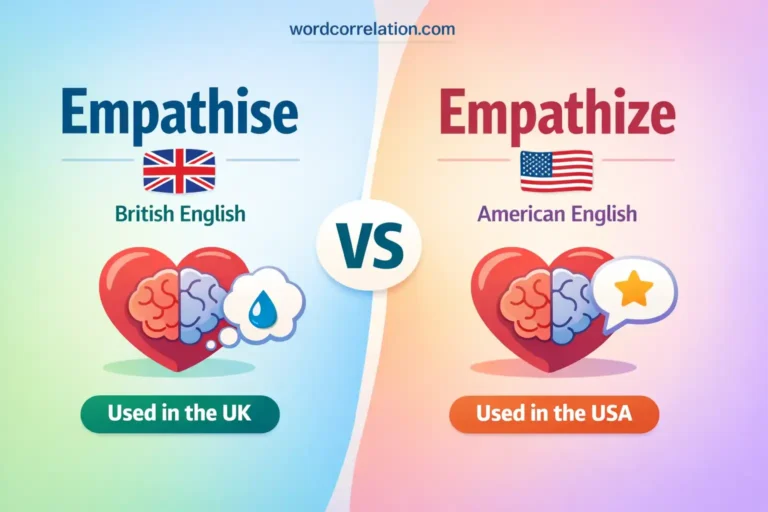
Empathise or Empathize – Quick Answer
- Both words mean to understand and share someone’s feelings.
- Empathise is British English.
- Empathize is American English.
Example:
- UK: I empathise with your situation.
- US: I empathize with your situation.
The Origin of Empathise or Empathize
The word comes from Greek. The root word is empatheia. It means feeling inside. Later, German writers used Einfühlung. English borrowed the idea in the early 1900s.
At first, writers used many spellings. However, English later split by region. Britain preferred -ise endings. America chose -ize endings. As a result, both forms survived.
Confusion happens because both spellings look correct. Moreover, both appear in books and online. Therefore, learners think one must be wrong. In reality, history allowed both forms to grow. This pair is part of our UK vs US spelling guide.
British English vs American English Spelling
English spelling changes by country. However, rules stay simple once you see them clearly.
Key Difference
- British English prefers -ise.
- American English prefers -ize.
Examples in Use
- organise vs organize
- realise vs realize
Quick Comparison Table
| Feature | Empathise | Empathize |
| Region | UK / Commonwealth | United States |
| Ending | -ise | -ize |
| Meaning | Same | Same |
| Tone | Standard | Standard |
In contrast, meaning never changes. Therefore, only spelling matters.
Which Spelling Should You Use?
Choosing the right form depends on your audience. Fortunately, the rule stays easy.
For US Readers
Use empathize. Schools, news, and companies expect it. Moreover, American style guides prefer it.
For UK and Commonwealth Readers
Use empathise. Teachers and editors expect this form. Additionally, local publications use it daily.
For Global or Professional Writing
Pick one style. Then, stay consistent. In contrast, mixing both forms looks careless. Therefore, follow the style guide you use.
Common Mistakes with Empathise or Empathize
Writers make the same errors again and again. However, each mistake has a simple fix.
❌ She empathised about the issue.
✅ She empathised with the issue.
❌ Empathy and empathise mean the same thing.
✅ Empathy is a noun. Empathise is a verb.
These errors happen because people rush. Therefore, slow down and check structure.
Empathise or Empathize in Everyday Examples
Seeing real examples helps learning. Moreover, practice builds confidence.
Emails
- I empathize with your concern and will help soon.
News
- The leader said he empathised with affected families.
Social Media
- I totally empathize with this post.
Formal Writing
- The counselor empathised with the client’s emotions.
Each sentence shows correct use. Therefore, copy these patterns.
Empathise or Empathize – Google Trends & Usage Data
Search interest stays high for both forms. However, usage changes by region.
By Country
- United States: empathize dominates.
- United Kingdom: empathise leads clearly.
- Australia and Canada: British form appears more.
By User Type
- Students search both spellings.
- Writers focus on audience rules.
- ESL learners seek clarity.
- Professionals follow style guides.
Correct Usage vs Mistakes
Most searches come from spelling doubt. Therefore, clarity solves the issue fast. Another British vs American difference is faeces or feces.
Comparison Table: Empathise vs Empathize
| Aspect | Empathise | Empathize |
| Meaning | Understand feelings | Understand feelings |
| Part of Speech | Verb | Verb |
| Context | British English | American English |
| Formality | Formal and informal | Formal and informal |
| Common Mistake | Wrong region use | Wrong region use |
| Correct Example | I empathise with you. | I empathize with you. |
This table removes confusion instantly.
Semantic FAQs (People Also Ask)
Is empathise the same as empathize?
Yes. Meaning stays the same. Only spelling changes.
Which one is correct in formal writing?
Both work. However, choose based on audience.
Can they be used interchangeably?
Yes in meaning. However, avoid mixing styles.
Why do people confuse them?
Both spellings look correct. Moreover, tools show both.
Can grammar tools catch this mistake?
Sometimes. However, tools may allow both forms.
Is there a British vs American difference?
Yes. Britain uses empathise. America uses empathize.
Conclusion
Overall, the difference between empathise and empathize stays simple. Meaning never changes. Spelling changes by region. However, many writers overthink it. Therefore, mistakes happen often. A similar pattern appears in visualization or visualisation.
In short, use empathize for American readers. Use empathise for British and Commonwealth readers. Moreover, always add with after the verb. That small word matters.
Finally, remember one easy rule. Match your spelling to your audience and stay consistent. Follow that rule every time. As a result, your writing looks clear, confident, and professional.

Daniel Morris writes about English word differences and spelling confusion. His focus is to provide clear, simple explanations with practical usage examples.