Many people search for minimalistic vs minimalist because both words look almost the same. They sound similar, and both relate to simplicity. So, confusion is normal. Writers, students, and even professionals often mix them up.
The mistake usually happens when someone wants to describe a simple style but is not sure which word fits better. Sometimes, using the wrong word can make your writing feel less natural. It can also confuse readers, especially in formal or creative contexts.
In this guide, you will learn the exact difference between minimalistic and minimalist. You will also see when to use each word in real life. By the end, you will not guess anymore. You will know.
Minimalistic vs Minimalist – Quick Answer
Minimalistic and minimalist both relate to simplicity, but they are not the same.
- Minimalist is the correct and more common word
- Minimalistic is less natural and often avoided
Meaning of Minimalist
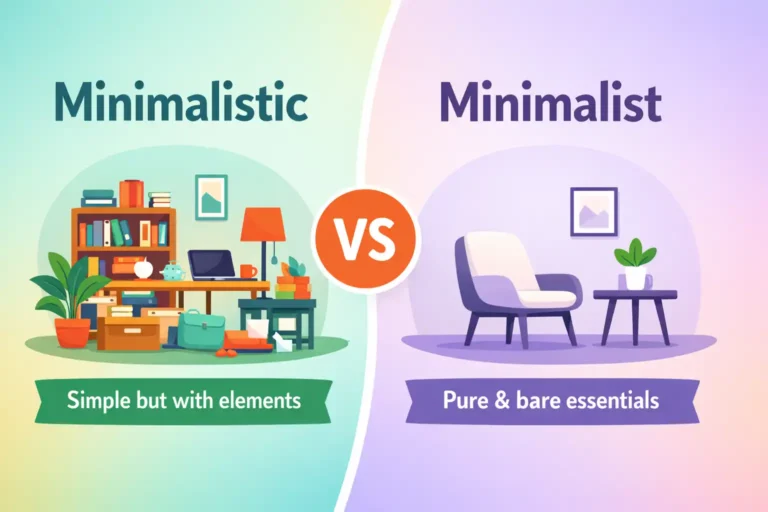
- Describes a simple style with very few elements
- Used in design, art, lifestyle
- Example: “She loves minimalist design.”
Meaning of Minimalistic
- Means the same but sounds less natural
- Rarely used by professionals
- Example: “The room looks minimalistic.”
Easy rule:
Use minimalist in most cases. Avoid minimalistic unless needed.
The Origin of Minimalistic vs Minimalist
The word minimalist comes from minimalism. This term started in art and design during the 20th century. Artists wanted to remove extra details and focus on simple forms. So, the word “minimalist” became popular.
Later, people started using minimalism in lifestyle, fashion, and writing. It began to mean “less is better.”
Now, the word minimalistic formed by adding “-ic” to minimalist. This pattern exists in English. However, not all such forms become popular. In this case, minimalistic never became standard usage.
Because of this, most native speakers prefer minimalist.
Writers often confuse these words because both look correct. Also, many similar pairs exist in English, like “realistic” and “realist.” But here, only one feels natural.
British vs American English Spelling
There is no spelling difference between British and American English for these words.
Both regions use:
- minimalist
- minimalistic
However, usage preference is the same worldwide.
| Word | US Usage | UK Usage | Preferred |
| Minimalist | Very common | Very common | ✅ Yes |
| Minimalistic | Rare | Rare | ❌ No |
In contrast to other words, this is not about spelling. It is about natural usage.
How to Choose the Right Word Fast
Choosing between these words is simple if you follow this guide.
For US audience
- Use minimalist
- Sounds natural and correct
For UK / Commonwealth
- Use minimalist
- Same rule applies
Global or professional writing
- Always use minimalist
- It is clear and widely accepted
There is no regional difference. So, your focus should be on clarity and tone, not spelling.
Common Mistakes with Minimalistic vs Minimalist
Many learners make small but important mistakes.
❌ Incorrect → ✅ Correct
- ❌ “I like minimalistic design.”
✅ “I like minimalist design.” - ❌ “She follows a minimalistic lifestyle.”
✅ “She follows a minimalist lifestyle.” - ❌ “This is a minimalistic approach.”
✅ “This is a minimalist approach.”
Why this matters:
Using minimalistic may not be wrong in grammar. However, it sounds unnatural. Editors usually replace it with minimalist.
Minimalistic vs Minimalist in Real Life Examples
Let’s see how these words appear in real use.
Emails
- “We prefer a minimalist layout for the website.”
News
- “The house features a clean, minimalist design.”
Social Media
- “Trying a minimalist lifestyle this year.”
Professional Writing
- “The brand uses a minimalist visual identity.”
You will notice something important. Most real examples use minimalist, not minimalistic.
Minimalistic vs Minimalist – Word Usage Patterns and Search Trends
In general, minimalist is far more popular. Writers, designers, and brands use it daily.
Who searches this term?
- Students learning English
- ESL learners
- Content writers
- Designers and bloggers
Why confusion happens
People think adding “-ic” makes a word more formal. However, that is not always true.
Real-world confusion example
A designer writes “minimalistic logo” in a portfolio. A client may feel it sounds odd. This small mistake can affect trust.
So, correct usage matters in professional spaces.
Comparison Table: Minimalistic vs Minimalist
| Feature | Minimalist | Minimalistic |
| Meaning | Simple style with few elements | Same meaning |
| Part of Speech | Adjective / Noun | Adjective |
| Context of Use | Design, lifestyle, writing | Rare usage |
| Formal vs Informal | Works in both | Less preferred |
| Common Mistake | None | Overuse instead of minimalist |
| Correct Example | “Minimalist room design” | “Minimalistic room design” (less natural) |
This table shows one clear point: minimalist is the better choice.
FAQs
Is minimalistic the same as minimalist?
Yes, they share meaning. However, minimalist is more natural.
Which one is correct in formal writing?
Minimalist is correct and preferred.
Can they be used interchangeably?
Technically yes, but you should avoid minimalistic.
Why do people confuse them?
Because both look similar and follow common word patterns.
Can grammar tools catch this mistake?
Some tools suggest “minimalist” instead of “minimalistic.”
Is there a British vs American difference?
No, both regions prefer minimalist.
Is minimalistic wrong?
Not fully wrong, but it sounds less natural.
Conclusion
Understanding minimalistic vs minimalist is easier than it seems. Both words relate to simplicity. However, only one fits naturally in modern English.
Minimalist is the correct and widely used word. It works in design, writing, lifestyle, and professional content. On the other hand, minimalistic exists but feels less natural. So, most writers avoid it.
The most common mistake is choosing minimalistic when minimalist sounds cleaner. This small error can affect how your writing feels to readers.
Overall, always choose clarity over complexity. In short, use minimalist in almost every situation. Finally, remember this simple rule:
👉 If you are unsure, always pick minimalist.

Daniel Morris writes about English word differences and spelling confusion. His focus is to provide clear, simple explanations with practical usage examples.