You see two tiny notes in sheet music. They look similar. They sit before a main note. And yet, they do not sound the same at all. This is where many music students feel lost.
The confusion between acciaccatura vs appoggiatura happens because both are grace notes. Both are small. Both come before a main note. But the way you play them is very different. If you mix them up, the music will sound wrong. Teachers notice it. Examiners notice it. And listeners feel it, even if they do not know why.
So, what is the real difference? Why do these two Italian words still confuse learners today? And how can you tell which one to play in just one second?
This guide explains everything in very simple steps. You will learn the sound, the purpose, and the easy rule that removes all doubt.
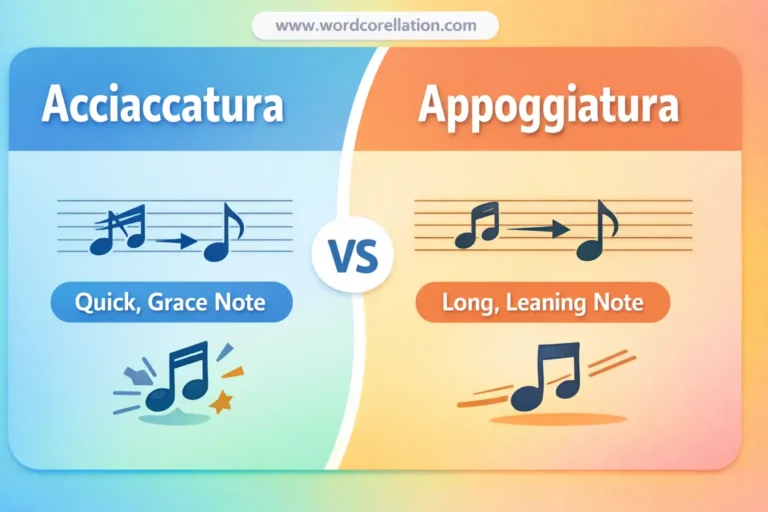
Acciaccatura vs Appoggiatura – Quick Answer
- Acciaccatura: very fast grace note. You crush it into the main note.
- Appoggiatura: slow grace note. You lean on it before the main note.
- Acciaccatura steals no time.
- Appoggiatura steals time from the main note.
Easy rule:
If it sounds quick → acciaccatura.
If it sounds expressive and long → appoggiatura.
The Origin of Acciaccatura vs Appoggiatura
Both words come from Italian music language used in the Baroque and Classical periods.
- Acciaccatura means to crush.
- Appoggiatura means to lean.
These names describe exactly how you play them.
In old keyboard music, especially in works by composers like Domenico Scarlatti, the acciaccatura was played almost at the same time as the main note. It felt like a quick decoration.
Meanwhile, composers such as Wolfgang Amadeus Mozart used the appoggiatura to add emotion. It created tension before resolving into the main note.
So the confusion today happens because:
- Both appear as small notes
- Both come before a main note
- Many modern scores do not explain how to play them
But historically, they had very clear roles.
British English vs American English Spelling
There is no spelling difference between British and American English for these terms.
They are Italian musical terms used worldwide.
| Term | UK Spelling | US Spelling |
| Acciaccatura | Acciaccatura | Acciaccatura |
| Appoggiatura | Appoggiatura | Appoggiatura |
Because they are musical terms, they stay the same in all countries.
Which Spelling Should You Use?
You do not need to change spelling based on audience.
- In the US → use the original Italian
- In the UK → use the original Italian
- In exams, books, or scores → always use the original form
There is no variation. The focus is only on how you play them, not how you spell them.
Common Mistakes with Acciaccatura vs Appoggiatura
Writers and students often make these mistakes:
❌ Playing both notes very quickly
✅ Only acciaccatura is very quick
❌ Holding the acciaccatura before the note
✅ The acciaccatura should be almost instant
That small slash through the note stem changes everything.
Acciaccatura vs Appoggiatura in Everyday Examples
In Sheet Music
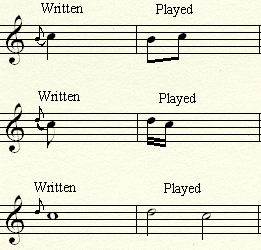
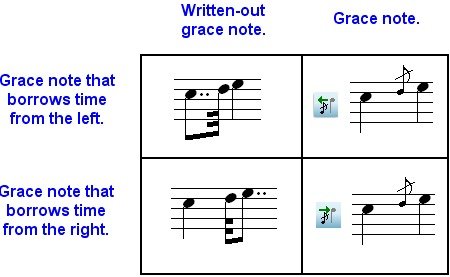
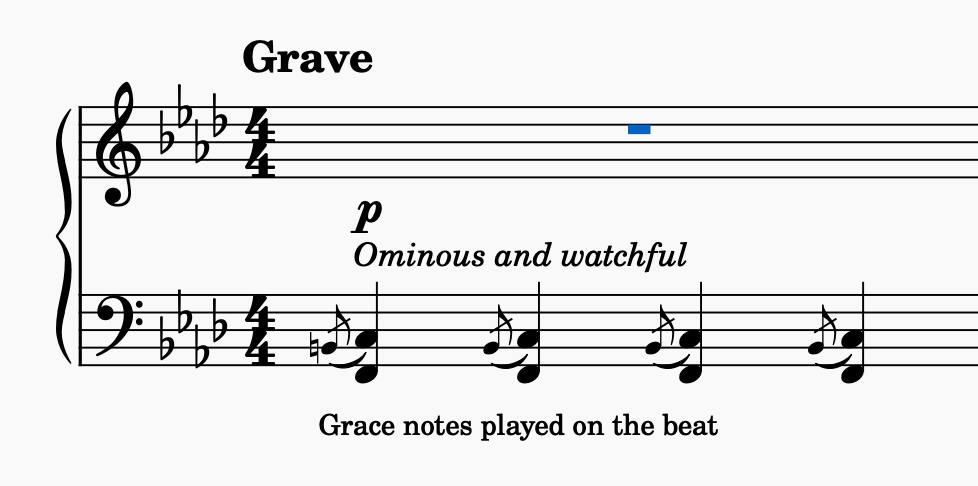
- A small note with a slash → acciaccatura
- A small note without a slash → appoggiatura
Piano Playing
- Acciaccatura feels like a finger slip into the note
- Appoggiatura feels like you rest on the note before moving
Singing
- Acciaccatura is almost not heard
- Appoggiatura carries emotion and weight
Orchestral Music
String players and wind players treat the appoggiatura as expressive. But they play the acciaccatura as decoration.
Acciaccatura vs Appoggiatura – Usage Patterns & Search Interest
Many students search this term before music exams. Piano learners, violin students, and theory learners often struggle with it.
Music teachers often say: “Do not rush the appoggiatura.” This shows how common the mistake is.
A real problem happens in performance exams. If a student plays an appoggiatura too fast, the examiner may mark it as incorrect style. The music loses its intended emotion.
So this is not just theory. It changes how the music sounds and how you are judged.
Comparison Table
| Feature | Acciaccatura | Appoggiatura |
| Meaning | Crushed note | Leaning note |
| Part of music | Grace note | Grace note |
| Time value | Takes no time | Takes time from main note |
| How it sounds | Very quick | Slow and expressive |
| Notation sign | Small note with slash | Small note without slash |
| Emotional weight | Decorative | Expressive |
| Common mistake | Played too long | Played too short |
| Correct example | Quick slide into note | Hold before resolving |
FAQs
Is acciaccatura the same as appoggiatura?
No. One is fast and crushed. The other is slow and expressive.
Which one is longer?
The appoggiatura is longer because it takes time from the main note.
Can they be used interchangeably?
No. They create very different musical effects.
Why do people confuse them?
They look similar in notation and both are small grace notes.
Can music software detect this mistake?
Most software shows the symbol, but it cannot force correct playing style.
Is there a British vs American difference?
No. These are Italian musical terms used the same way worldwide.
What is the easiest way to tell them apart?
Look for the slash. Slash means acciaccatura.
Conclusion
The difference between acciaccatura vs appoggiatura is simple once you know what to listen for. One is a crushed, fast decoration. The other is a leaning, emotional note that steals time.
Many learners make the mistake of playing both too quickly. This removes expression from the music. It also breaks the style intended by composers like Mozart and Scarlatti.
So, always check the symbol first. Then think about the sound you need to create.
Final rule to remember:
Slash and fast → acciaccatura.
No slash and expressive → appoggiatura.

Daniel Morris writes about English word differences and spelling confusion. His focus is to provide clear, simple explanations with practical usage examples.