
Many people feel unsure when they write donts or don’ts. You may have seen both forms online, in emails, or even in books. So, which one is right? This small spelling detail often causes confusion, especially for students, ESL learners, and even professional writers.
The mistake usually happens when people try to make “don’t” plural. Some drop the apostrophe, while others keep it. Because of this, both forms appear in real use, but only one is correct in standard English. This matters because wrong spelling can make your writing look careless or unclear.
In this article, you will learn the correct form, why the confusion exists, and how to avoid this mistake every time. You will also see real examples, common errors, and a simple rule you can remember easily.
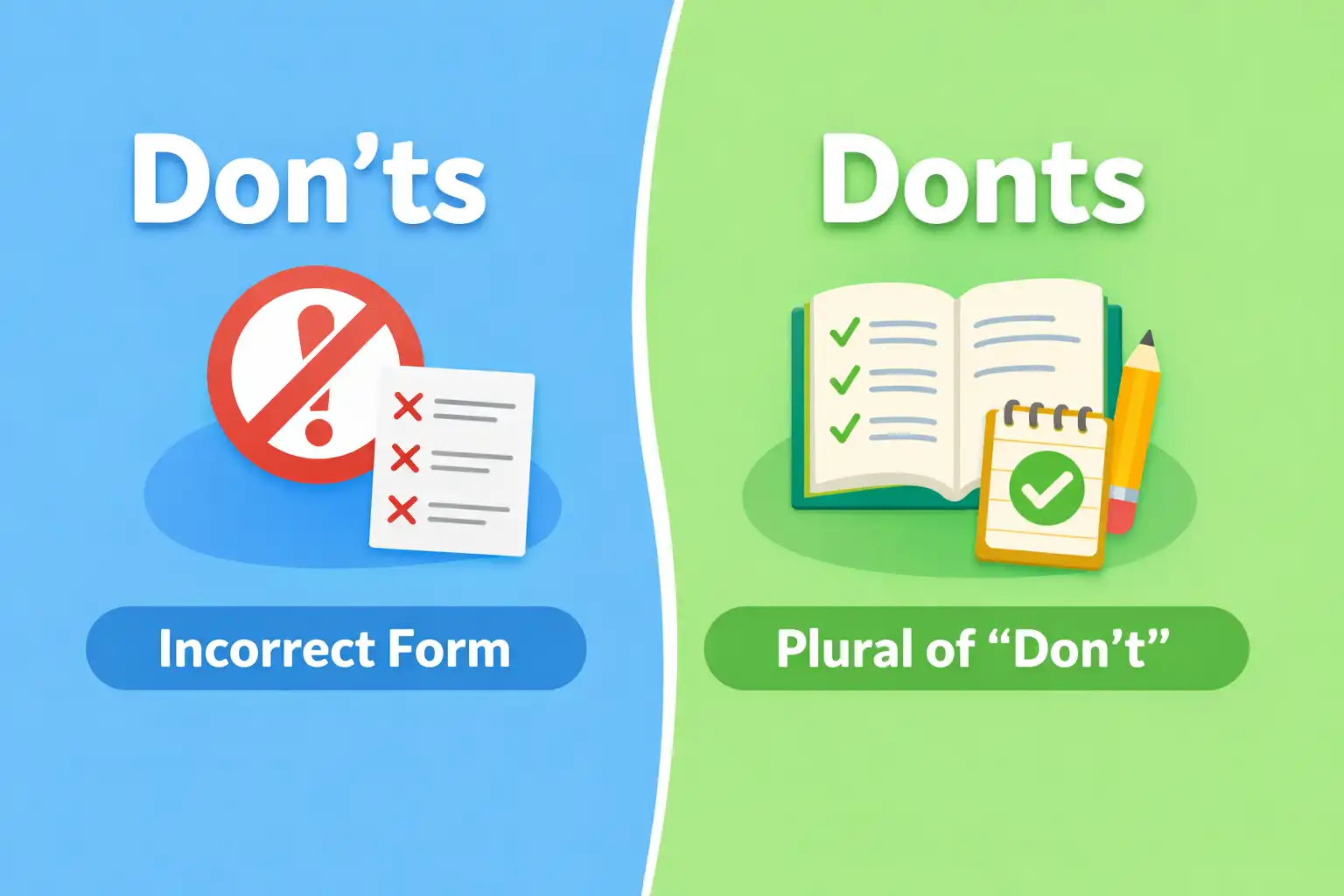
donts or don’ts – Quick Answer
Meaning of donts
- ❌ Incorrect spelling
- Missing apostrophe
- Not accepted in standard English
Meaning of don’ts
- ✅ Correct plural of “don’t”
- Refers to things you should not do
- Common in advice and rules
Examples:
- Follow these don’ts in interviews.
- Social media has many don’ts.
Easy rule:
Always use don’ts with an apostrophe.
The Origin of donts or don’ts
The word “don’t” comes from the contraction of “do not.” Over time, people started using it not just in sentences, but also as a noun. For example, “a list of don’ts” means a list of things you should not do.
When English speakers made this word plural, they kept the apostrophe. So, “don’ts” became the correct form. This follows a common pattern where contractions keep their apostrophes even in plural form.
However, confusion started when people thought apostrophes are only for possession, not plurals. Because of this belief, they removed the apostrophe and wrote “donts.” This mistake spread online, especially in casual writing.
Writers often confuse this because English rules for apostrophes can feel tricky. But in this case, the rule is simple and consistent.
British vs American English Spelling
There is no difference between British and American English for this word. Both use “don’ts” as the correct spelling.
| Form | British English | American English |
| don’ts | ✅ Correct | ✅ Correct |
| donts | ❌ Incorrect | ❌ Incorrect |
However, people in both regions may still make the same mistake in informal writing. So, the confusion is global, not regional.
How to Choose the Right Word Fast
Choosing between donts or don’ts is very easy once you know the rule.
For US users
Always use don’ts in all writing, formal or informal.
For UK / Commonwealth users
Use don’ts as well. The rule is the same.
For global or professional writing
Stick with don’ts because it is grammatically correct and widely accepted.
There is no situation where “donts” is correct. So, you can ignore it completely.
Common Mistakes with donts or don’ts
Writers often make small but clear errors with this word. Here are the most common ones:
❌ Learn the donts before you start
✅ Learn the don’ts before you start
❌ Social media donts are important
✅ Social media don’ts are important
These mistakes happen because people forget that “don’t” is a contraction, and its plural keeps the apostrophe.
Another mistake is thinking apostrophes should never be used in plurals. While that is true in many cases, it does not apply here.
donts or don’ts in Real Life Examples
You will often see don’ts used in daily communication. Here are some clear examples:
Emails
- Please review the do’s and don’ts before the meeting.
- Here are the don’ts for client communication.
News
- Experts shared travel don’ts during peak season.
- Health officials listed key don’ts for safety.
Social Media
- Gym don’ts you must avoid.
- Dating don’ts everyone should know.
Professional Writing
- The guide explains workplace don’ts clearly.
- Follow these don’ts to improve your writing style.
In all these cases, the apostrophe stays because the word comes from “don’t.”
donts or don’ts – Word Usage Patterns and Search Trends
The keyword donts or don’ts is searched often because people feel unsure about punctuation. Many learners type both forms to check which one is correct.
Students, bloggers, and content writers search this term the most. ESL learners also struggle with it because apostrophe rules differ across languages.
In real life, misuse can create confusion. For example, in a professional guide, writing “donts” may reduce trust. Readers may question the quality of the content.
Editors usually correct this mistake quickly because it is easy to spot and fix.
Comparison Table: donts vs don’ts
| Feature | donts | don’ts |
| Meaning | Incorrect form | Things you should not do |
| Part of Speech | Not valid | Noun (plural) |
| Context of Use | None | Advice, rules, guidance |
| Formal vs Informal | Not used | Used in both |
| Common Mistake | Missing apostrophe | None |
| Correct Example | ❌ List of donts | ✅ List of don’ts |
This table shows clearly that only one form is correct.
FAQs About donts or don’ts
Is donts the same as don’ts?
No. Donts is incorrect, while don’ts is the correct form.
Which one is correct in formal writing?
Always use don’ts in formal writing.
Can they be used interchangeably?
No. Only don’ts is acceptable.
Why do people confuse them?
People often misunderstand apostrophe rules and remove it by mistake.
Can grammar tools catch this mistake?
Yes, most tools like spell checkers will flag “donts” as incorrect.
Is there a British vs American difference?
No. Both use don’ts only.
Should I avoid apostrophes in plurals?
Usually yes, but not for contractions like don’t → don’ts.
Conclusion
Understanding donts or don’ts is simple once you know the rule. The correct form is always don’ts, with an apostrophe. This happens because the word comes from the contraction “don’t,” and its plural keeps that mark.
Many writers make the mistake of dropping the apostrophe, but this creates incorrect spelling. This error often appears in casual writing, but it should never be used in proper English.
Overall, the best way to avoid confusion is to remember the origin of the word. If it comes from “don’t,” then the apostrophe must stay. This one rule can save you from a very common mistake.
Finally, keep this in mind:
If you mean “things not to do,” always write don’ts, not donts.

Ibrahim Jhon is an English language editor with over ten years of experience working with writers, publishers, and international businesses. He specialises in word choice, grammar accuracy, and the differences between British and American English.