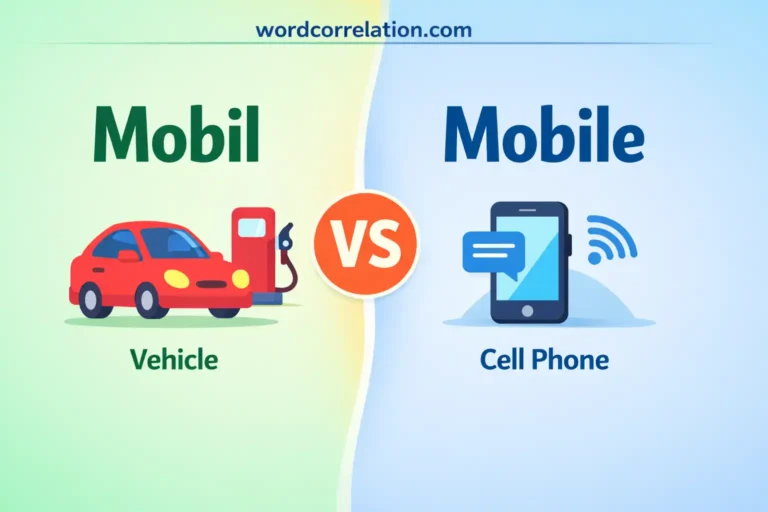
The words “mobil” vs “mobile” are often a source of confusion, especially for those learning English or non-native speakers. While they may appear similar, they are not always interchangeable. This mix-up typically occurs when people try to refer to “mobile” phones or movable objects but mistakenly use “mobil” instead. Whether you’re a student, writer, or professional, knowing the correct usage of these words is crucial for clear communication.
In some languages, such as German and French, “mobil” is commonly used to describe something that moves, which might contribute to the confusion in English. However, in English, “mobile” is the correct term to describe objects like phones or vehicles that are capable of moving. On the other hand, “Mobil” is mostly known as a brand name, such as the famous Mobil Oil company. This difference in usage is important to understand to avoid errors, especially in formal or professional contexts.
By reading this article, you’ll learn why the “mobil” vs “mobile” confusion happens, the correct way to use each word, and the impact of getting it wrong. We’ll walk you through common mistakes, show real-life examples, and help you remember when to use each term with confidence. Let’s clear up the confusion once and for all!
Mobil vs Mobile – Quick Answer
- Mobile is the correct spelling in English, particularly for referring to “cell phones” or something that moves.
- Mobil is often used as a brand name, such as Mobil Oil, or in non-English languages.
Key Differences:
- Mobile (adjective): Relating to movement or capable of moving; common in everyday use.
- Example: “I have a mobile phone.”
- Mobil: Primarily used as a brand name or in languages like French and German.
- Example: “I filled up at the Mobil gas station.”
The Origin of “Mobil” vs “Mobile”
The origins of “mobil” and “mobile” trace back to different languages and uses.
- Mobile comes from the Latin word “mobilis,” meaning “movable” or “capable of moving.” It is used in many contexts, from describing a “mobile phone” to anything that moves or is transportable. Over time, it has become part of modern English, especially in reference to technology and transportation.
- Mobil, on the other hand, has roots in branding. It is most famously known as the name of a major oil company, Mobil Oil, which was founded in the United States. The name was derived from the word “mobile,” but with a specific corporate branding twist.
Reason for Confusion Today
So, why is there confusion between “mobil” vs “mobile”? It all comes down to usage and regional differences. In some languages like German and French, “mobil” is the correct spelling for referring to something that moves. In contrast, English speakers predominantly use “mobile.”
Additionally, because “Mobil” is a well-known brand (like Mobil Oil), people sometimes mistakenly think it is the general term for “mobile” when referring to phones or objects that can move.
British English vs American English Spelling
In general, “mobile” is used both in British and American English for most contexts. However, in British English, “mobile” refers to cell phones, while in American English, it’s used for anything that moves.
| Country | Spelling | Example |
| British English | Mobile | “I bought a new mobile.” (cell phone) |
| American English | Mobile | “The mobile unit is on its way.” (moving unit) |
| Other Languages (e.g., German, French) | Mobil | “Mobil Oil” |
Which Spelling Should You Use?
Spelling For the US:
- Mobile is the right choice for anything that moves or refers to a “cell phone.”
- Mobil is used as part of the brand name Mobil Oil, but not for general use.
For the UK / Commonwealth:
- Mobile should be used for “cell phones” and anything that moves.
- Mobil remains a brand name, such as “Mobil Oil.”
For Global or Professional Writing:
- Stick with Mobile when referring to mobile phones or any movable item, especially for clarity.
- Mobil should only be used when referring to specific brands or businesses, not in general usage.
Common Mistakes with “Mobil” vs “Mobile”
Even though it seems simple, many people get confused between “mobil” and “mobile.” Let’s go over a few common mistakes:
- ❌ Incorrect: “I have a mobil phone.”
✅ Correct: “I have a mobile phone.” - ❌ Incorrect: “She uses mobil units for transport.”
✅ Correct: “She uses mobile units for transport.”
These mistakes happen because people confuse the brand name “Mobil” with the common adjective “mobile.”
“Mobil” vs “Mobile” in Everyday Examples
Here are a few examples of how to use “mobile” and “mobil” correctly in different situations:
1. Emails:
- “I just got a new mobile phone.”
- “Please call me on my mobile.”
2. News:
- “The company is launching a mobile app soon.”
- “This mobil service has been around for decades.”
3. Social Media:
- “Mobile phones have become part of everyday life.”
- “I filled up at the Mobil station today.”
4. Formal or Professional Writing:
- “Our company is upgrading to a mobile-based system.”
- “I use a mobile device to stay connected while traveling.”
“Mobil” vs “Mobile” – Usage Patterns & Search Interest
Looking at the general popularity trends, we see that mobile is far more common in everyday writing, particularly for things like “mobile phones” and “mobile technology.”
Common User Groups:
- Students and ESL learners often search for clarification between these two words, especially when writing about technology.
- Writers and content creators frequently encounter this confusion, especially when working with different language markets.
Real-World Scenario:
Imagine you’re writing an email and you want to talk about your “mobile phone.” If you mistakenly use “mobil,” readers could get confused, thinking you are referring to the brand instead of the device. This minor mistake could make your writing seem less professional, particularly in formal settings.
Comparison Table: Mobil vs Mobile
| Aspect | Mobil | Mobile |
| Meaning | Often a brand name (e.g., Mobil Oil) | Anything that can move or is related to cell phones |
| Part of Speech | Noun (brand name) | Adjective (describing something that moves) |
| Context of Use | Specific to certain brands and services | Commonly used for technology and movement |
| Formal vs Informal | Informal for general use | Formal and informal for anything movable |
| Common Mistakes | Confused with “mobile” | Using “mobil” instead of “mobile” for phones |
| Correct Example | “I filled up at the Mobil station.” | “I need a mobile phone.” |
Semantic FAQs (People Also Ask)
Is “Mobil” the same as “Mobile”?
- No, “Mobil” is a brand name, while “mobile” refers to something that moves, such as a mobile phone.
Which one is correct in formal writing?
- Mobile is correct for most uses in formal writing, especially when referring to mobile phones or anything movable.
Can they be used interchangeably?
- No, “mobil” is specific to brand names and certain languages, while “mobile” is the correct term for general use in English.
Why do people confuse them?
- The confusion arises because “Mobil” is a well-known brand name, and some people mistakenly use it for other meanings.
Can grammar tools catch this mistake?
- Yes, many grammar tools will highlight “mobil” when you mean “mobile” in contexts like phone usage.
Is there a British vs American difference?
- Both British and American English use “mobile” for phones, with no significant difference in spelling between the two.
Conclusion
In short, the confusion between “mobil” and “mobile” is common, but easy to resolve. Always use mobile when referring to something that moves, like a cell phone, and save Mobil for brand names like Mobil Oil.
One easy rule to remember: If you’re talking about phones or anything that moves, use “mobile.” Always reserve “Mobil” for specific brands.

Daniel Morris writes about English word differences and spelling confusion. His focus is to provide clear, simple explanations with practical usage examples.