Late at night, you search online for sleepwear. You type one word, then pause. Is it pyjamas or pajamas? Both look right. Both look wrong. So you check again. This small spelling question is one of the most common English confusions today.
Many learners, students, and even writers face this problem. The words sound the same. They mean the same thing. But the spelling changes. Because of that, people worry about mistakes. They worry about exams, emails, posts, and work writing. That worry is real, and it slows people down.
So this article fixes that problem. It explains why this confusion exists and It shows how each spelling is used in real life. It also gives one simple rule you can remember. By the end, you will know which word to use, when to use it, and why it matters. Now let’s clear it up in a calm and simple way.
Pyjamas vs Pajamas – Quick Answer
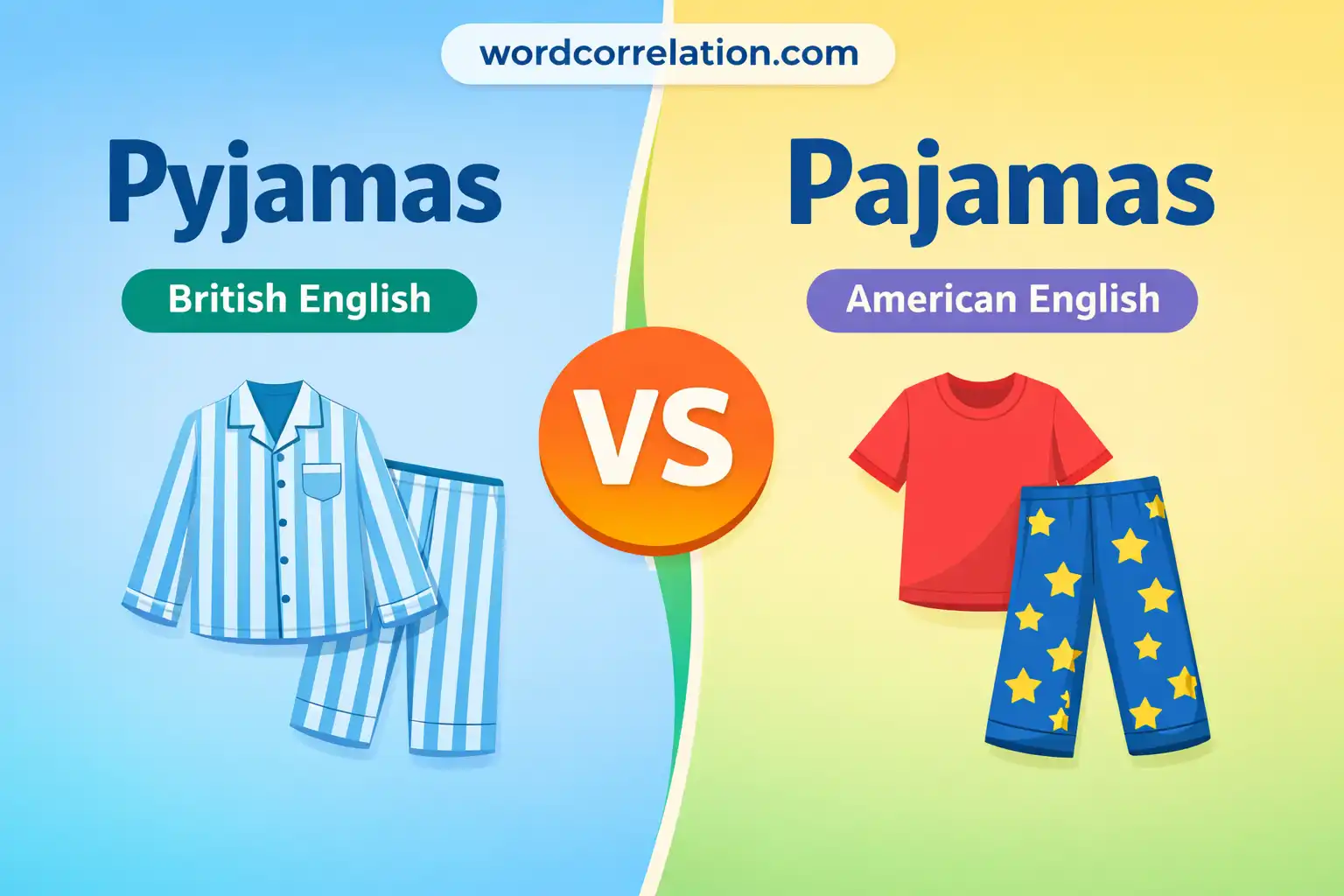
- Both words mean the same thing: clothes you wear to sleep.
- Pyjamas is British English spelling.
- Pajamas is American English spelling.
Easy rule:
- Writing for the UK or Commonwealth? Use pyjamas.
- Writing for the US? Use pajamas.
Example:
- UK blog: “I bought new pyjamas.”
- US store: “Cotton pajamas on sale.”
The Origin of Pyjamas vs Pajamas
The story of these words starts far from English. Long ago, people in South Asia wore loose pants for comfort. These pants were called pāy-jāma. The word meant “leg clothing.” Over time, British traders and travelers saw these clothes. They liked them. So they took both the clothes and the word back home.
Later, the British spelling became pyjamas. It followed British spelling habits. Meanwhile, American English changed many spellings to be shorter and simpler. Because of that, pajamas became the standard in the United States.
So the confusion today is not about meaning. It is about history. Two English systems grew apart. Both are correct. They just belong to different places.
British English vs American English Spelling
This difference is a classic case of British vs American spelling. The sound stays the same. Only the letters change.
- British English: pyjamas
- American English: pajamas
In contrast, the meaning never changes. Both words describe sleepwear, nouns. Both are used daily.
Here is a simple comparison:
| Region | Correct Spelling |
| UK | pyjamas |
| US | pajamas |
| Canada | pyjamas (often) |
| Australia | pyjamas |
| Global brands | depends on audience |
So the spelling follows the reader, not the writer.
Which Spelling Should You Use?
The best spelling depends on who will read your words.
For the United States:
Use pajamas. This spelling looks natural to American readers. It is also expected in schools, stores, and media.
For the UK and Commonwealth:
Use pyjamas. This includes the UK, Australia, New Zealand, and often Canada.
For global or professional writing:
Choose one style and stay consistent. Many international brands pick American spelling. Others follow British style guides. Consistency matters more than the choice.
So before you write, think about your audience. Then choose once and stick with it.
Common Mistakes with Pyjamas vs Pajamas
Writers often make small but noticeable mistakes with this word.
❌ I bought new pajama.
✅ I bought new pajamas.
Explanation: The word is usually plural.
❌ These pyjama is soft.
✅ These pyjamas are soft.
Explanation: Treat it like plural clothing words.
❌ Mixing spellings in one text.
✅ Use one spelling style only.
Editors usually see this error in blogs and ads. It looks careless, even though the meaning is clear.
Pyjamas vs Pajamas in Everyday Examples
You see this word everywhere, so correct use matters.
Emails:
- “Please wear comfortable pajamas during the overnight event.”
News:
- “The charity donated warm pyjamas to children.”
Social media:
- “Lazy Sunday in my favorite pajamas.”
Formal writing:
- “The patient changed into hospital pyjamas.”
In all cases, the spelling matches the audience. That is the key point.
Pyjamas vs Pajamas – Usage Patterns & Search Interest
Many people search this topic because spellcheck tools do not always help. One version may show as an error, depending on language settings. That creates doubt.
Students, ESL learners, and content writers search this term the most. They want to avoid small mistakes that feel big. In exams or job writing, spelling choice can affect confidence.
One real-world problem appears in eCommerce. A UK store using pajamas may confuse local shoppers. They may still understand, but the brand feels foreign. That small detail matters more than people think.
📊 Comparison Table: Pyjamas vs Pajamas
| Feature | Pyjamas | Pajamas |
| Meaning | Sleepwear | Sleepwear |
| Part of speech | Noun (plural) | Noun (plural) |
| Main usage | UK English | US English |
| Formal or informal | Both | Both |
| Common mistake | Using US spelling in UK text | Using UK spelling in US text |
| Correct example | “Warm pyjamas for winter.” | “Soft pajamas for kids.” |
This table removes the confusion fast.
❓ Semantic FAQs (People Also Ask)
Is pyjamas the same as pajamas?
Yes. The meaning is exactly the same.
Which one is correct in formal writing?
Both are correct. Use the one that matches your audience.
Can they be used interchangeably?
Only if consistency does not matter. In most cases, pick one style.
Why do people confuse them?
Because they sound the same and spellcheck tools vary.
Can grammar tools catch this mistake?
Sometimes, but only if language settings are correct.
Is there a British vs American difference?
Yes. That is the only difference.
Conclusion
Overall, pyjamas vs pajamas is a spelling choice, not a meaning problem. Both words describe the same sleepwear. The confusion exists because English has two main spelling systems. British English uses pyjamas. American English uses pajamas. That difference shows up in writing, shopping, and learning.
The biggest mistake to avoid is mixing both spellings in one text. That makes writing look messy. Instead, choose based on your reader. UK readers expect British spelling. US readers expect American spelling. Global writing needs one clear style.
In short, remember this one rule: write for your audience, not the dictionary. If you follow that, you will always be right. Finally, once you choose, stay consistent. That small habit builds clear and confident English.

Rudyard Kipling is an English writer and poet whose work demonstrates sustained attention to language choice, precision of meaning, and the practical power of words. Born in 1865 in Bombay and educated in England, he builds his career as a journalist and editor in India before establishing himself as a major literary figure through fiction, poetry, and essays.
His professional background in research-based writing is shaped by reporting, close observation, and disciplined revision, all of which inform his exact use of vocabulary.
Kipling’s writing reflects a deep awareness of semantics and nuance, particularly in how similar words can carry different cultural, emotional, or contextual meanings. His stories and poems rely on careful word selection to convey authority, tone, and intent, making his work valuable for readers interested in language accuracy and comparison.
For audiences seeking clarity in meaning, his body of work offers concrete examples of how subtle differences in wording influence interpretation. This focus on linguistic precision supports informed reading and fosters trust in language as a tool for clear understanding.