You type a sentence about food. You want to say the curry is hot and full of flavor. Then you stop. Is it spicy or spicey? Both look right for a second. But one of them is wrong, and many people search this every day.
This confusion happens in emails, school work, menus, and social posts. Autocorrect sometimes misses it. Spell check does not always explain why one is correct. So writers keep guessing. That guess can make simple writing look careless.
Now this article fixes the problem in a clear way. You will learn the correct spelling, why the mistake happens, and how to remember it forever. You will also see real examples from daily life. After reading, you will never hesitate again.
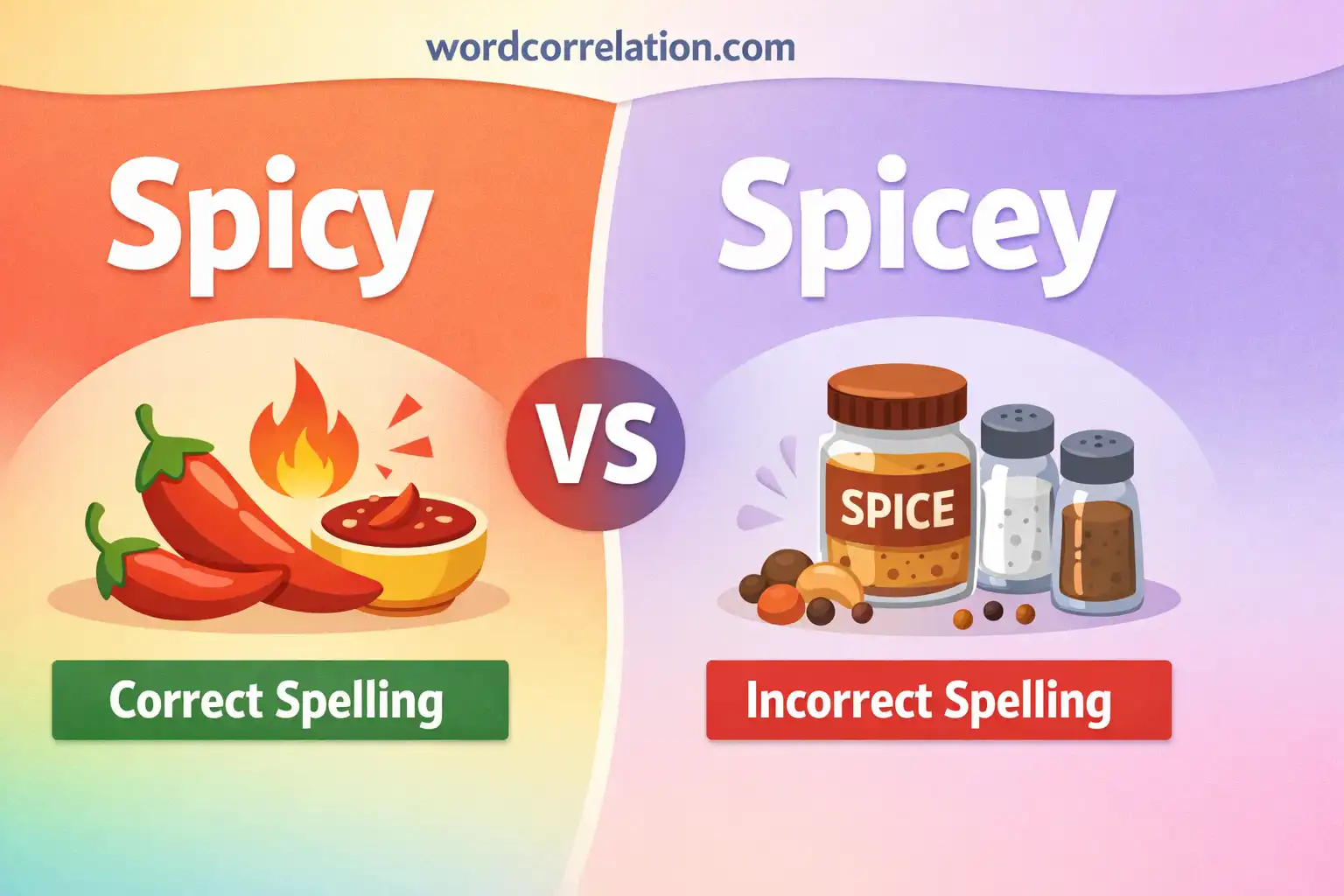
Spicy vs Spicey – Quick Answer
Spicy is the only correct spelling.
Spicey is a common mistake.
- Use spicy when food has strong flavor
- Never use spicey in formal writing
- Example: “This soup is spicy.”
Easy rule: If it comes from spice, drop the “e”.
The Origin of Spicy vs Spicey
The word spicy comes from the noun spice. Spice means dried seeds, roots, or powders used for flavor. Long ago, traders carried spices across oceans. People linked spice with heat and excitement. So the adjective spicy was born.
English often drops the final e before adding -y. That pattern appears in many words:
- spice → spicy
- ice → icy
- juice → juicy
Because of this rule, spicy follows normal English spelling logic.
However, confusion still happens today. Many learners see the base word spice and try to keep the “e”. So they write spicey. The brain wants to protect the original shape. That instinct feels natural, but English spelling does not work that way.
Editors often see this error in student essays and food blogs. It is not a rare mistake. So people keep searching the difference.
British English vs American English Spelling
There is no spelling difference between British and American English for this word.
Both systems use spicy.
| Region | Correct spelling |
| US | spicy |
| UK | spicy |
| Australia | spicy |
| Canada | spicy |
Some words change across regions, like color vs colour. However, this word stays the same everywhere. So location does not affect your choice.
Which Spelling Should You Use?
You should always use spicy in every audience and context.
- US writing: spicy
- UK / Commonwealth: spicy
- Global business: spicy
- Academic work: spicy
There is no accepted version of spicey. It appears only as a spelling error. Even informal texting should use spicy if clarity matters.
Now this makes your decision simple. You never need to choose between two valid options. Only one exists.
Common Mistakes with Spicy vs Spicey
Writers repeat the same small errors. Here are the most frequent ones:
❌ This salsa is spicey.
✅ This salsa is spicy.
People keep the “e” because they see the base word.
❌ I love spicey noodles.
✅ I love spicy noodles.
The mistake spreads in casual typing.
❌ The review said the dish was very spicey.
✅ The review said the dish was very spicy.
Spell check may underline it, but users ignore it.
The rule is simple: drop the e before adding y.
Spicy vs Spicey in Everyday Examples
Correct spelling appears in all types of writing.
Emails
“The sauce was spicy, but everyone liked it.”
News writing
“The restaurant is famous for its spicy street food.”
Social media
“That burger looks spicy 🔥”
Professional writing
“The product includes a spicy seasoning blend.”
Each example uses spicy naturally. The wrong form would weaken credibility, especially in public text.
Spicy vs Spicey – Usage Patterns & Search Interest
Search interest for this comparison stays high because learners question their spelling. Students and ESL readers form a large group. Food bloggers also search it often. They want menus and recipes to look professional.
A real problem happens in restaurants. Imagine a printed menu that says spicey wings. Customers notice. Some laugh. Others doubt the quality. A tiny spelling error can affect trust.
So the confusion is small, but the impact feels real.
Comparison Table
| Feature | Spicy | Spicey |
| Meaning | Full of strong flavor | Same intended meaning |
| Part of speech | Adjective | Misspelling |
| Context of use | Food, slang, excitement | Informal error only |
| Formal vs informal | Accepted everywhere | Not accepted |
| Common mistakes | None | Keeping extra “e” |
| Correct example | “The curry is spicy.” | ❌ Not correct |
This table shows that only one form belongs in real writing.
FAQs
Is spicy the same as spicey?
No. Spicy is correct. Spicey is a spelling mistake.
Which one is correct in formal writing?
Only spicy works in formal writing.
Can they be used interchangeably?
No. Editors reject spicey.
Why do people confuse them?
People try to keep the “e” from spice. English drops it.
Can grammar tools catch this mistake?
Most spell checkers catch it, but users sometimes ignore the warning.
Is there a British vs American difference?
No difference exists. Both use spicy.
Conclusion
The confusion between spicy vs spicey looks small, but it troubles many writers. The correct spelling is always spicy. English removes the final “e” before adding “y”, and this rule appears in many words. So the spelling follows a clear pattern.
Mistakes happen because the brain wants to protect the base word spice. However, writing keeps rules for clarity. Readers expect standard spelling in emails, menus, and professional text. Even casual posts look sharper with the correct form.
Overall, you never need to guess again. Use spicy in every situation. Avoid spicey completely. Finally, remember one simple rule: drop the “e”, add the “y”, and keep it spicy.