Have you ever wondered whether to write “sweety” or “sweetie”? You’ve probably seen both words used online, but you might be unsure when to use each one. Well, you’re not alone! Many people mix up “sweety” and “sweetie” because they look and sound so similar. If you’re one of those who find this confusing, don’t worry. You’re about to learn everything you need to know to get it right.
In this article, we’ll explore the difference between “sweety” and “sweetie” in simple, easy-to-understand terms. You’ll learn the correct context for each word, when and where to use them, and most importantly, avoid common mistakes. Whether you’re a student, an ESL learner, or just someone who wants to improve your writing, this guide will clear up any confusion.
So, let’s dive into this sweet topic and uncover the truth behind “sweety” vs “sweetie”!
Sweety vs Sweetie – Quick Answer
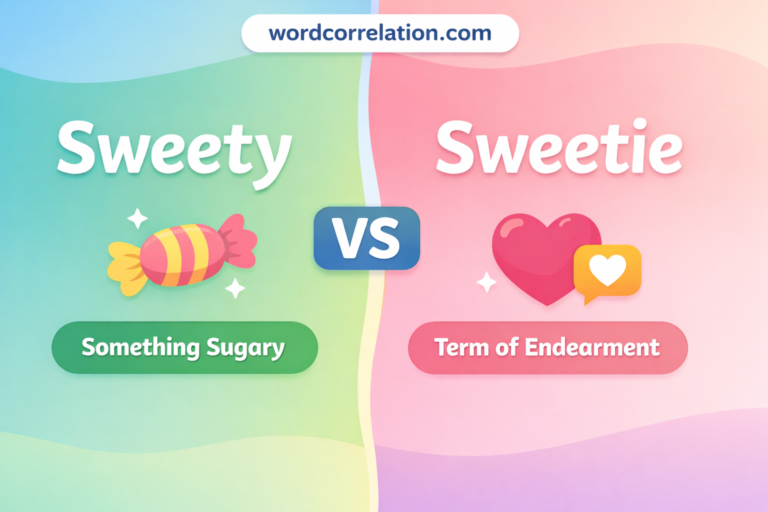
- “Sweety”: Commonly a misspelling of “sweetie.”
- “Sweetie”: The correct term, used as a term of endearment, meaning “someone who is sweet” or a “beloved person.”
- Rule: Use “sweetie” for all contexts. “Sweety” is generally incorrect in standard writing.
The Origin of Sweety vs Sweetie
Both “sweety” and “sweetie” stem from the word “sweet,” which originally meant something pleasant or sugary. The term “sweetie” has been used since the 18th century, often as a term of affection or endearment, like calling someone “my dear” or “honey.” It’s still widely used today in various forms, especially in informal contexts.
The confusion arises because many people mistakenly spell “sweetie” as “sweety,” thinking the “y” at the end of “sweet” should carry over. This isn’t correct, however. While “sweetie” is the proper term, “sweety” tends to pop up as a typo or casual mistake.
Reason for Confusion Today
The main reason for confusion is that “sweety” looks like a logical extension of “sweet,” especially in online writing. Since both words are used to describe someone who is kind, charming, or adorable, people often assume that “sweety” is a simple variation.
However, English spelling rules don’t support “sweety.” It’s an informal mistake that can crop up, especially in digital communication like text messages, social media posts, or blogs where spelling mistakes are more common. “Sweetie” is the word to stick with for proper, respectful usage.
British English vs American English Spelling
Luckily, there’s no real difference in spelling between British and American English when it comes to “sweetie.” Both versions of English use “sweetie” as the correct form. However, “sweety” isn’t considered acceptable in either dialect.
Quick Example:
- Correct: “You’re my sweetie!” (used universally)
- Incorrect: “You’re my sweety!” (should be avoided)
Which Spelling Should You Use?
- Use “Sweetie”: This is the standard, universally accepted term.
- Do not use “Sweety”: This is a mistake that should be avoided in all writing contexts.
Whether you’re writing an email, a social media post, or a formal document, “sweetie” is the only appropriate choice. “Sweety” may slip through in informal chats, but it’s best to stick with “sweetie” when clarity and professionalism are required.
Common Mistakes with Sweety vs Sweetie
Here are some typical mistakes people make when using “sweety” and how to fix them:
❌ Incorrect: “Hey, sweety, how are you?”
✅ Correct: “Hey, sweetie, how are you?”
❌ Incorrect: “She is my sweety pie.”
✅ Correct: “She is my sweetie pie.”
As you can see, “sweety” is simply a typo or incorrect variation of “sweetie.” Always double-check to avoid using it in your writing.
Sweety vs Sweetie in Everyday Examples
Here’s how you should use “sweetie” in different contexts:
- Emails: “Dear sweetie, I hope you’re having a great day!”
- Social Media: “This sweetie has the best smile 😍”
- News: “The sweetie pie of the week is our beloved teacher!”
- Professional Writing: Avoid using “sweetie” in formal emails or official documents.
Sweety vs Sweetie – Usage Patterns & Search Interest
Search interest for both “sweety” and “sweetie” tends to peak around certain times, especially when people are feeling affectionate or celebratory (e.g., Valentine’s Day). However, the confusion often leads learners and writers to search for answers about the difference between these two.
One real-world scenario where misuse of “sweety” causes confusion is in email marketing. If a business uses “sweety” in its customer emails or advertisements, it can come off as unprofessional. This is why it’s important to know the correct usage.
Comparison Table
| Aspect | Sweety | Sweetie |
|---|---|---|
| Meaning | Incorrect variation of sweetie | A term of endearment, someone sweet |
| Part of Speech | Adjective (misspelled) | Noun (used for affection) |
| Context of Use | Informal, misspelled in casual texts | Informal, affectionate, in love |
| Formal vs Informal | Informal (incorrect) | Informal (correct) |
| Common Mistakes | Misused in writing as sweetie | Correct usage |
| Example | “Hey, sweety!” | “Hey, sweetie!” |
Semantic FAQs
- Is Sweety the Same as Sweetie?
- No, “sweety” is a common mistake. “Sweetie” is the correct term.
- Which one is correct in formal writing?
- “Sweetie” is never used in formal writing. Both should be avoided in professional contexts.
- Can they be used interchangeably?
- No, only “sweetie” is acceptable.
- Why do people confuse them?
- People mistakenly use “sweety” due to its similarity to the word “sweet” and a misunderstanding of spelling.
- Can grammar tools catch this mistake?
- Most grammar tools will catch “sweety” as a spelling mistake and suggest “sweetie.”
- Is there a British vs American difference?
- No, there is no difference between the two dialects. “Sweetie” is used universally.
Conclusion
In short, “sweetie” is the correct term for a term of endearment, while “sweety” is a common misspelling. To avoid confusion in your writing, always use “sweetie” to show affection or kindness. This simple rule will help you sound more professional and clear, whether you’re texting a friend or writing a social media post.
Remember: When in doubt, go with “sweetie”! It’s the sweet spot between formal and informal writing. This article gives you the tools to confidently use “sweetie” and avoid the mistake of writing “sweety.” Now that you’re equipped with this knowledge, feel free to use “sweetie” correctly in your writing, and watch your clarity improve!

Daniel Morris writes about English word differences and spelling confusion. His focus is to provide clear, simple explanations with practical usage examples.