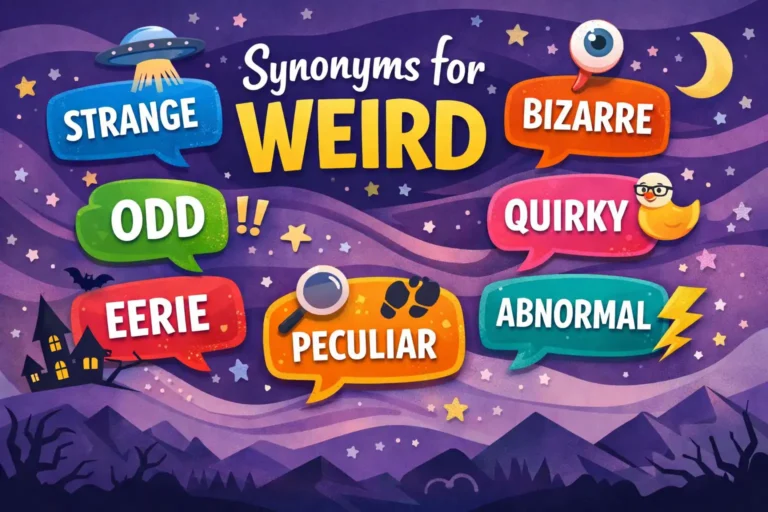
Have you ever seen something so odd that you did not know what word to use? Maybe your friend wore two different shoes. Maybe your cat barked like a dog. You might say, “That is wierd!” (The correct spelling is weird.)
The word weird is very common in daily English. People use it when something feels strange, funny, or not normal. But if you use the same word again and again, your speech and writing can sound dull.
Knowing many synonyms for wierd (weird) helps students, bloggers, content writers, and daily English users. It helps you speak better,write better. It makes your English more colorful and fun.
In this guide, you will learn what weird means, how to use it, and exactly 50 easy synonyms you can start using today.
What is Weird?
Weird means something is not normal. It feels strange, odd, or surprising.
If something makes you pause and say, “Hmm, that is not usual,” you can call it weird.
Related ideas:
- Strange
- Unusual
- Funny-looking
- Different
Weird things are not always bad. Sometimes they are funny. Sometimes they are interesting.
Benefits of Learning Synonyms for Weird
Learning many words for weird can help you in many ways:
- Improves your speaking skills
- Makes your writing more interesting
- Helps you avoid repeating the same word
- Builds strong vocabulary for school and exams
- Helps bloggers and writers create rich content
- Makes conversations more fun and clear
How Weird Improves Your Vocabulary Skills
When you replace weird with better words, your English becomes richer.
For example:
- Instead of “That movie was weird,” you can say, “That movie was bizarre.”
- Instead of “He is weird,” you can say, “He is quirky.”
This small change makes your sentence sound smarter and clearer.
Common Uses of Weird in Daily Life and Writing
People use weird in many places:
- Daily talks with friends
- Story writing
- Blog posts
- School essays
- Social media captions
- Movie reviews
That is why knowing alternatives is very helpful.
Tips and Best Practices for Using Weird Synonyms
- Match the word to the situation.
- Use simple words when speaking to kids.
- Use strong words like bizarre in writing.
- Do not overuse one synonym.
- Practice by making sentences daily.
SYNONYMS LIST (Exactly 50)
Below are 50 synonyms for weird. Each one has a simple meaning and two easy examples.
1. Strange
Meaning: Not normal or usual.
Examples:
- That noise sounds strange.
- He gave me a strange look.
2. Odd
Meaning: Different in a funny way.
Examples:
- She wore an odd hat.
- That was an odd question.
3. Unusual
Meaning: Not common.
Examples:
- It is unusual to see snow here.
- He has an unusual voice.
4. Bizarre
Meaning: Very strange.
Examples:
- That dream was bizarre.
- The story felt bizarre.
5. Peculiar
Meaning: Strange in a special way.
Examples:
- He has a peculiar laugh.
- That smell is peculiar.
6. Quirky
Meaning: Odd but interesting.
Examples:
- She has a quirky style.
- His room looks quirky.
7. Curious
Meaning: Strange and interesting.
Examples:
- That is a curious sound.
- I saw a curious shape.
8. Funny
Meaning: Strange or silly.
Examples:
- That smells funny.
- He acts funny sometimes.
9. Wacky
Meaning: Silly and strange.
Examples:
- He told a wacky joke.
- That idea is wacky.
10. Freaky
Meaning: Strange and a little scary.
Examples:
- That movie was freaky.
- I heard a freaky noise.
11. Eerie
Meaning: Strange and scary.
Examples:
- The house felt eerie.
- It was an eerie night.
12. Uncanny
Meaning: Very strange and surprising.
Examples:
- He has an uncanny memory.
- That felt uncanny.
13. Abnormal
Meaning: Not normal.
Examples:
- That result is abnormal.
- His behavior is abnormal.
14. Uncommon
Meaning: Rare and strange.
Examples:
- That bird is uncommon.
- She has an uncommon name.
15. Rare
Meaning: Not seen often.
Examples:
- That is a rare event.
- He has a rare skill.
16. Outlandish
Meaning: Very strange and wild.
Examples:
- That outfit is outlandish.
- He shared an outlandish story.
17. Offbeat
Meaning: Different from normal style.
Examples:
- She likes offbeat music.
- That show is offbeat.
18. Kooky
Meaning: Funny and strange.
Examples:
- He has a kooky smile.
- That idea sounds kooky.
19. Weird-looking
Meaning: Looks strange.
Examples:
- That bug is weird-looking.
- He made a weird-looking cake.
20. Different
Meaning: Not the same as others.
Examples:
- Her dress is different.
- That tastes different.
21. Unexpected
Meaning: Not planned or normal.
Examples:
- That was unexpected.
- I heard an unexpected sound.
22. Mysterious
Meaning: Strange and unknown.
Examples:
- The place feels mysterious.
- He gave a mysterious smile.
23. Oddball
Meaning: A strange person.
Examples:
- He is a real oddball.
- That kid acts like an oddball.
24. Nutty
Meaning: Silly and strange.
Examples:
- That plan is nutty.
- He said something nutty.
25. Crazy
Meaning: Very strange.
Examples:
- That idea is crazy.
- He did a crazy thing.
26. Wild
Meaning: Very unusual.
Examples:
- That story is wild.
- She has wild ideas.
27. Off
Meaning: Not quite right.
Examples:
- Something feels off.
- His tone sounds off.
28. Funky
Meaning: Strange but cool.
Examples:
- She wore funky shoes.
- That room looks funky.
29. Oddish
Meaning: A little strange.
Examples:
- That looks oddish.
- He seems oddish today.
30. Unfamiliar
Meaning: Not known before.
Examples:
- That place feels unfamiliar.
- I heard an unfamiliar sound.
31. Exotic
Meaning: Strange and from far away.
Examples:
- She ate exotic food.
- That bird looks exotic.
32. Alien
Meaning: Very strange and not normal.
Examples:
- That idea feels alien.
- His voice sounded alien.
33. Spooky
Meaning: Strange and scary.
Examples:
- The woods felt spooky.
- That story is spooky.
34. Weirdish
Meaning: Slightly weird.
Examples:
- That looks weirdish.
- He feels weirdish today.
35. Quizzical
Meaning: Strange and questioning.
Examples:
- She gave a quizzical look.
- He had a quizzical face.
36. Surreal
Meaning: Very strange like a dream.
Examples:
- The view looked surreal.
- That moment felt surreal.
37. Absent-minded
Meaning: Acting strange by forgetting.
Examples:
- He is absent-minded today.
- She made an absent-minded mistake.
38. Irregular
Meaning: Not normal shape or form.
Examples:
- That rock is irregular.
- His pattern looks irregular.
39. Baffling
Meaning: Strange and confusing.
Examples:
- That puzzle is baffling.
- His words were baffling.
40. Ridiculous
Meaning: Silly and strange.
Examples:
- That rule is ridiculous.
- He made a ridiculous face.
41. Silly
Meaning: Funny and strange.
Examples:
- That joke is silly.
- He wore a silly hat.
42. Goofy
Meaning: Funny and strange.
Examples:
- He has a goofy walk.
- She made a goofy face.
43. Absurd
Meaning: Very strange and not logical.
Examples:
- That idea is absurd.
- He told an absurd story.
44. Distinctive
Meaning: Strange in a special way.
Examples:
- She has a distinctive voice.
- That smell is distinctive.
45. Off-center
Meaning: Not in the normal place.
Examples:
- The picture looks off-center.
- His thinking is off-center.
46. Odd-looking
Meaning: Looks strange.
Examples:
- That fish is odd-looking.
- He drew an odd-looking man.
47. Curious-looking
Meaning: Looks strange and interesting.
Examples:
- That box is curious-looking.
- She wore a curious-looking ring.
48. Not right
Meaning: Feels strange or wrong.
Examples:
- This feels not right.
- His answer sounds not right.
49. Weird
Meaning: Strange and not normal.
Examples:
- That is weird.
- He said something weird.
50. Eccentric
Meaning: Strange in a fun way.
Examples:
- He is an eccentric man.
- She has an eccentric style.
Common Mistakes to Avoid with Weird
- Do not use weird for everything.
- Do not use hard words in simple talks.
- Do not mix scary words like eerie with funny situations.
- Always match the synonym with the feeling.
FAQ
Q1: Is “wierd” correct spelling?
No. The correct spelling is weird.
Q2: Why should I learn synonyms for weird?
It improves your English and writing quality.
Q3: Can weird be positive?
Yes. Sometimes weird means fun and interesting.
Conclusion
The word weird is useful, but using it again and again is boring. Now you know 50 simple synonyms for wierd (weird) that you can use in daily life, school work, and writing.
Practice these words. Use them in sentences. Your English will sound fresh and smart.

Daniel Morris writes about English word differences and spelling confusion. His focus is to provide clear, simple explanations with practical usage examples.