Many people stop when they write weeped or wept. The doubt feels small. However, the mistake looks big in writing. Students face it in exams. Writers face it in articles. ESL learners face it daily. Therefore, this confusion matters.
The verb weep means to cry. Still, English verbs change form in tricky ways. Some verbs add -ed. Others change fully. As a result, people guess and write weeped. That guess feels logical. However, English does not always follow logic. In contrast, it follows history.
This article solves that exact problem. First, it explains why people search this keyword. Next, it shows which word is correct. Moreover, it explains why the wrong form feels right. You will also see real examples. Additionally, you will learn how professionals use the word. Finally, you will leave with one easy rule you can remember forever.
For more tricky word forms like this, explore the word comparison hub for side-by-side explanations.
Weeped or Wept – Quick Answer
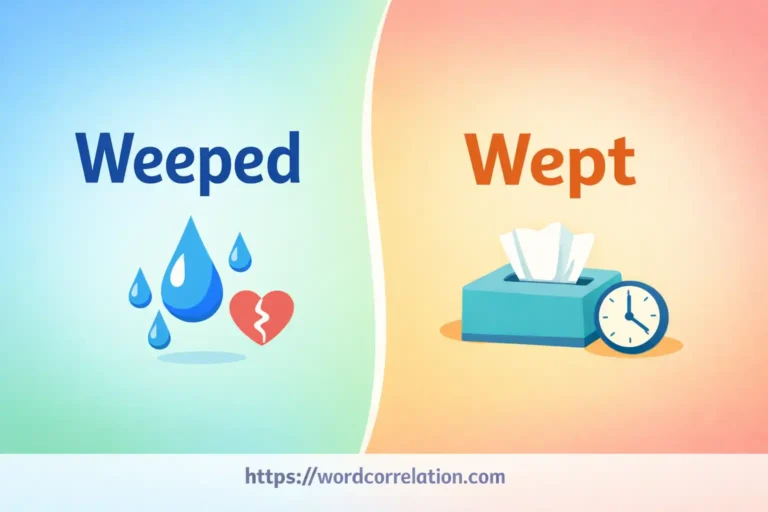
Wept is the correct past tense of weep.
Weeped is incorrect in standard English.
- Present: I weep when I feel sad.
- Past: I wept after hearing the news.
Therefore, always use wept for past actions.
The Origin of Weeped or Wept
The verb weep comes from Old English. Long ago, English verbs changed sounds instead of adding endings. As a result, many old verbs formed their past tense in irregular ways.
Weep → Wept follows that older pattern.
Sleep → Slept works the same way.
Keep → Kept also follows it.
However, modern learners expect -ed endings. Therefore, weeped feels natural. In contrast, English keeps the old form alive. That history causes the confusion.
Moreover, English never updated these verbs. As a result, writers must memorize them. This rule stays fixed in both spoken and written English.
This is a helpful entry in our spelling errors pillar for commonly mistyped past forms.
British English vs American English Spelling
Many learners think this difference depends on region. However, weeped or wept does not change across countries.
Both British and American English use wept.
| Aspect | British English | American English |
| Correct past tense | wept | wept |
| Incorrect form | weeped | weeped |
| Accepted usage | wept | wept |
In contrast to words like colour and color, this verb stays the same. Therefore, location does not matter here.
Which Spelling Should You Use?
Your audience decides tone. However, correctness never changes.
For US readers:
Use wept in all writing.
For UK or Commonwealth readers:
Use wept as well.
For global or professional writing:
Choose wept every time.
Moreover, editors expect this form. Therefore, using weeped can hurt clarity. In formal settings, mistakes reduce trust. As a result, learning this rule protects your writing.
Common Mistakes with Weeped or Wept
Many errors follow the same pattern. Below are the most common ones.
❌ She weeped all night.
✅ She wept all night.
❌ He has weeped during the speech.
✅ He has wept during the speech.
❌ They were weeped after the loss.
✅ They wept after the loss.
The mistake happens because weep looks regular. However, English treats it as irregular. Therefore, the -ed rule does not apply. If you mix letters often, excelerate or accelerate is another useful comparison to read.
Weeped or Wept in Everyday Examples
Seeing the word in real life helps memory. Therefore, review these common situations.
Emails:
She wept after reading your message.
News:
The mother wept as the verdict was read.
Social media:
I wept watching that movie last night.
Formal writing:
He wept quietly during the ceremony.
Each example uses wept. Moreover, none accept weeped. As a result, consistent exposure builds confidence.
Weeped or Wept – Google Trends & Usage Data
Search data shows clear patterns. Students search this term the most. ESL learners follow closely. Writers also search when editing content.
By country:
- High searches in India, Pakistan, UK, and USA
- Medium searches in Canada and Australia
By user type:
- Students: exam confusion
- Writers: editing accuracy
- ESL learners: verb tense learning
- Professionals: formal writing checks
Correct usage appears far more often than mistakes. However, incorrect searches still rise. Therefore, this topic stays relevant.
Comparison Table: Weeped vs Wept
| Feature | Weeped | Wept |
| Meaning | Incorrect form | Past tense of weep |
| Part of speech | None (invalid) | Verb (past tense) |
| Context of use | Common mistake | All correct contexts |
| Formal vs informal | Not accepted | Accepted everywhere |
| Common mistakes | Used by learners | Rare errors |
| Correct example | ❌ She weeped | ✅ She wept |
This table removes doubt instantly. Therefore, bookmark it if needed.
Semantic FAQs (People Also Ask)
Is weeped the same as wept?
No. Wept is correct. Weeped is wrong.
Which one is correct in formal writing?
Use wept in all formal cases.
Can they be used interchangeably?
No. Only wept works.
Why do people confuse them?
Because many verbs add -ed.
Can grammar tools catch this mistake?
Yes. Most tools flag weeped.
Is there a British vs American difference?
No. Both use wept.
Conclusion
Overall, the choice between weeped or wept feels confusing at first. However, the rule stays simple. English treats weep as an irregular verb. Therefore, its past tense becomes wept.
Many learners guess based on spelling. In contrast, English depends on history. As a result, logic sometimes fails. Memorizing this one form saves time later. Moreover, correct usage improves trust and clarity.
Always remember this pattern:
Sleep → Slept
Keep → Kept
Weep → Wept
Finally, follow one easy rule. If the verb sounds old, check its past tense. That habit prevents mistakes. In short, never write weeped. Always write wept.You’ll see the same kind of mistake pattern in handywork or handiwork too.

Daniel Morris writes about English word differences and spelling confusion. His focus is to provide clear, simple explanations with practical usage examples.