Many people search fireman vs firefighter because both words seem to mean the same job. You may see “fireman” in movies, but “firefighter” in news reports. So confusion starts. Students, writers, and ESL learners often wonder which word is correct, polite, or modern.
This confusion matters because words show respect and accuracy. Using the wrong term can sound outdated or informal in professional writing.
In this guide, you will learn the real difference, when to use each word, and how to choose the right one fast. By the end, you will feel confident and clear.
Quick Answer: Fireman vs Firefighter (Which Word to Use Today)
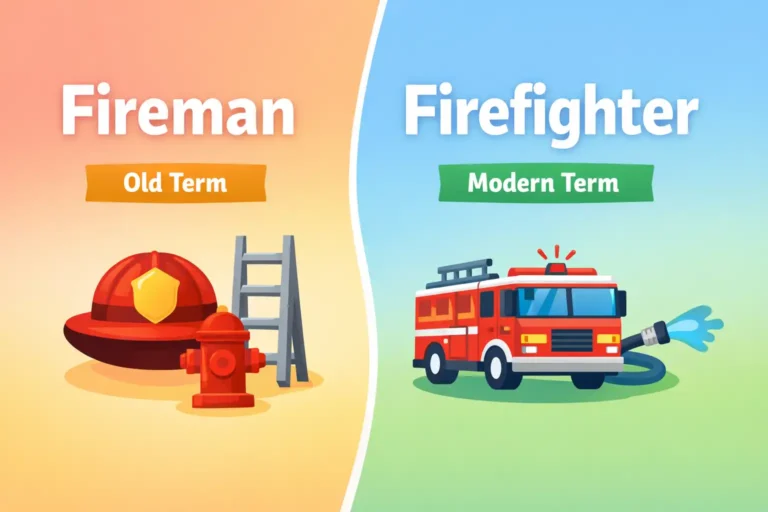
- Fireman: An older, gender-specific word for a person who fights fires.
- Firefighter: A modern, gender-neutral word used today.
Examples:
- The firefighter saved the family. ✅
- The fireman saved the family. (older style)
Easy rule: Use firefighter in most situations today.
Origin of “Fireman” and “Firefighter”: Why Language Changed
The word fireman came first. It started many years ago when most people in the job were men. So the name matched the reality at that time. Newspapers, books, and early reports all used “fireman.”
However, jobs changed over time. Women also joined fire services. Society also became more careful about gender equality. Because of this, the word firefighter appeared. It focuses on the action, not the gender. The person fights fires, so the name became firefighter.
Now, many organizations prefer firefighter because it includes everyone. Therefore, the shift happened for fairness and clarity.
Writers often confuse the two because both still appear in media. Old movies say fireman, but modern news says firefighter.
British vs American Usage: Do UK/US Prefer Firefighter?
There is no spelling difference between British and American English for these words. Both countries use:
- Fireman
- Firefighter
However, usage style can differ slightly.
In both the UK and the US, firefighter is the standard modern term. Government agencies, news outlets, and official documents prefer it.
| Region | Preferred Term | Notes |
| United States | Firefighter | Professional standard |
| United Kingdom | Firefighter | Official and modern |
| Older texts | Fireman | Historical usage |
In contrast, “fireman” appears more in older stories, casual speech, or historical references.
How to Choose the Right Word Fast
Choosing is simple once you know your audience.
US audience
Use firefighter. It sounds professional and respectful.
UK / Commonwealth audience
Also use firefighter. It matches official terminology.
Global or professional writing
Always choose firefighter because it is gender-neutral and modern.
If you talk about history, then “fireman” may still fit. Otherwise, firefighter works almost everywhere.
Common Mistakes with Fireman vs Firefighter
Many errors happen because people copy old language.
❌ The fireman helped the injured woman at the airport report.
✅ The firefighter helped the injured woman in the report.
Explanation: Professional writing prefers firefighter.
❌ She wants to become a fireman.
✅ She wants to become a firefighter.
Explanation: Fireman sounds gender-specific and outdated.
❌ Our city hired new firemen this year.
✅ Our city hired new firefighters this year.
Explanation: Modern organizations use firefighter.
Editors usually see these mistakes in student essays and news drafts. The fix is simple: replace fireman with firefighter.
Fireman vs Firefighter in Everyday Examples
Understanding real situations helps a lot.
Emails
“I met a firefighter during the safety training yesterday.”
News
“A firefighter rescued two children from the building.”
Social media
“Thank you to every firefighter who protects our city.”
Formal or professional writing
“Firefighters play a critical role in emergency response systems.”
You may still see “fireman” in movies, cartoons, or older books. But modern communication prefers firefighter.
Fireman vs Firefighter – Where People See Each Term
oday, people usually see firefighter in official and modern places. Governments, news reports, and emergency services prefer this word because it is gender-neutral and professional. Many fire departments also use firefighter in job titles and public communication.
However, fireman still appears in some situations. You may notice it in:
- Older movies, books, and cartoons
- Historical stories or documents
- Casual speech, especially from older generations
- Some job names outside firefighting (like railway or ship roles)
Language changes over time. Because more women joined fire services and society moved toward inclusive language, many regions officially replaced “fireman” with “firefighter.” For example, some governments have formally adopted the gender-neutral term in recent years.
A real confusion example happens in schools. A child may read “fireman” in an old storybook but hear “firefighter” in class. Both refer to the same job, but the modern term is firefighter.
Reference: The time of india
Comparison Table: Fireman vs Firefighter
| Feature | Fireman | Firefighter |
| Meaning | Person who fights fires (male-focused) | Person who fights fires (gender-neutral) |
| Part of Speech | Noun | Noun |
| Context of Use | Older, informal, historical | Modern, professional, official |
| Formal vs Informal | Less formal today | Formal and standard |
| Common Mistake | Using it in professional writing | Rare mistakes |
| Correct Example | The fireman rang the bell. (old style) | The firefighter rang the bell. (modern) |
This table shows the difference clearly. Firefighter works in most cases today.
Fireman vs Firefighter FAQs
Is a fireman the same as a firefighter?
They refer to the same job, but firefighter is the modern and preferred term.
Which one is correct in formal writing?
Firefighter is correct in professional and academic writing.
Can they be used interchangeably?
Sometimes yes, but firefighter is safer in modern contexts.
Why do people confuse them?
Old media and books still use firemen, so learners see both.
Can grammar tools catch this mistake?
Some tools suggest firefighters, but not all detect the issue.
Is there a British vs American difference?
No spelling difference exists. Both regions prefer firefighters today.
Is fireman outdated?
It is not wrong, but it sounds older and less inclusive.
Conclusion
The difference between fireman vs firefighter is mostly about time and inclusivity. Fireman is the older word that people used when the job was mainly done by men. Firefighter is the modern word that includes everyone and focuses on the action, not gender. Because language changes, firefighter has become the standard term in news, workplaces, and official communication.
One-line summary: Firefighter is the modern, gender-neutral choice; fireman is older and less common today.
If you want to avoid mistakes, remember one simple rule: use firefighter in professional writing. This choice sounds current, respectful, and clear in almost every situation.

Daniel Morris writes about English word differences and spelling confusion. His focus is to provide clear, simple explanations with practical usage examples.