People often pause when they write hopped or hoped. The words look close. They sound close. So the mistake feels easy. A student writes one email. A learner posts one message. Suddenly, the meaning changes. That small spelling shift can confuse the reader fast.
This confusion happens a lot in daily writing. It shows up in homework, emails, stories, and even news posts. Writers often type fast, so they miss the extra p or forget the silent e. Because of that, the sentence can say something very different from what they mean.
In this guide, you will learn the clear difference between hopped vs hoped. You will see why people mix them up. You will also learn how to choose the right word every time. The goal is simple. After reading, you will stop guessing. You will write with confidence.
Hopped vs Hoped – Quick Answer
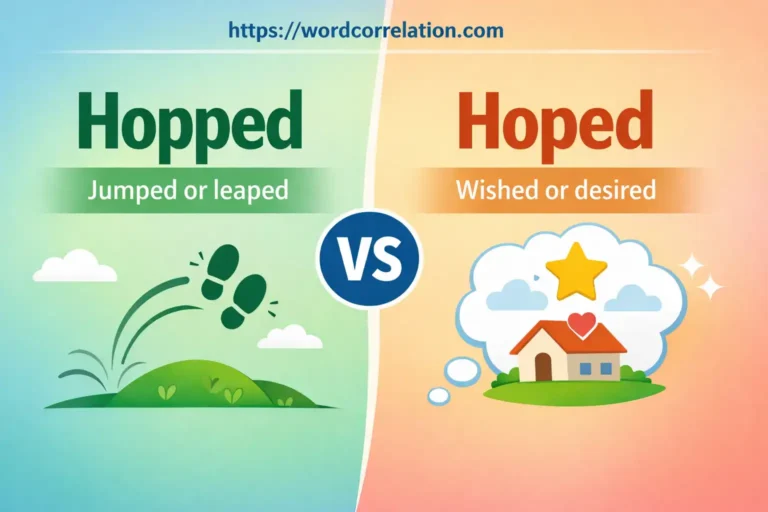
- Hopped means jumped or moved by jumping
Example: The rabbit hopped across the road. - Hoped means wanted something to happen
Example: She hoped for good news.
Easy rule:
If it involves a jump → hopped
If it involves a wish → hoped
The Origin of Hopped vs Hoped
The word hop is very old. It comes from early English and meant “to jump lightly.” Over time, people added -ed to show the past. That created hopped.
The word hope also comes from early English. It meant “trust” or “expect.” When writers talk about the past, they add -d. That makes hoped.
So the roots are different. The problem today comes from spelling rules. English drops the silent e in hope, but doubles the p in hop. New learners often miss this step. Even experienced writers slip sometimes.
British English vs American English Spelling
Here is some good news. There is no spelling difference between British and American English for these words.
- Hopped is spelled the same in the UK and the US
- Hoped is spelled the same in the UK and the US
However, usage still matters. British and American writers use both words often, but only in the correct context.
| Word | UK Spelling | US Spelling | Meaning |
| hopped | hopped | hopped | jumped |
| hoped | hoped | hoped | wished |
So, the issue is not location. The issue is meaning.
Which Spelling Should You Use?
The right choice depends on what you want to say.
In the US:
Use hopped for movement. Use hoped for wishes.
In the UK and Commonwealth:
The same rule applies. Meaning decides the spelling.
In global or professional writing:
Always check the verb action. Ask one question:
Is this a physical action or a feeling?
If it is physical, choose hopped.
If it is emotional or mental, choose hoped.
Common Mistakes with Hopped vs Hoped
Writers often confuse these in fast writing. Below are common errors.
❌ I hopped you feel better soon.
✅ I hoped you feel better soon.
❌ She hoped over the fence.
✅ She hopped over the fence.
These mistakes matter. One wrong letter can change the full meaning of a sentence. Readers may stop and reread. That breaks flow and clarity.
Hopped vs Hoped in Everyday Examples
Let’s look at how these words appear in real life.
Emails
- I hoped you received my message.
- The cat hopped onto the table.
News
- Fans hoped for a win last night.
- The deer hopped across the highway.
Social Media
- I hoped today would be easier.
- My dog hopped into the pool.
Formal or Professional Writing
- The team hoped to improve results.
- The athlete hopped over the barrier.
As you can see, context always guides the choice.
Hopped vs Hoped – Usage Patterns & Search Interest
Many people search hopped vs hoped because both words sound alike when spoken. ESL learners often struggle first. Students also mix them up in exams. Writers notice the issue during editing.
Search interest stays steady. That shows this confusion is common and ongoing.
One real-world problem appears in emails. Imagine writing, “I hopped you understand.” The reader may smile, but the message feels careless. In professional writing, that small error can reduce trust.
Comparison Table: Hopped vs Hoped
| Feature | Hopped | Hoped |
| Meaning | jumped or moved lightly | wanted something to happen |
| Part of speech | Verb (past tense) | Verb (past tense) |
| Context of use | Physical action | Feelings or wishes |
| Formal vs informal | Both | Both |
| Common mistakes | Used instead of hoped | Used instead of hopped |
| Correct example | The frog hopped away. | She hoped for success. |
This table alone can clear confusion fast.
FAQs: People Also Ask
Is hopped the same as hoped?
No. They have different meanings and uses.
Which one is correct in formal writing?
Both are correct when used in the right context.
Can they be used interchangeably?
No. One means movement. The other means desire.
Why do people confuse them?
They sound similar and differ by one letter.
Can grammar tools catch this mistake?
Sometimes, but context errors still slip through.
Is there a British vs American difference?
No. Both spellings are the same everywhere.
Conclusion
Overall, hopped vs hoped is a small spelling issue with a big impact. One word talks about action. The other talks about feeling. Mixing them up can confuse readers and weaken your writing.
The key takeaway is simple. Always stop and check meaning. Ask if the sentence shows movement or desire. Then choose the word that fits.
In short, never guess. Hopped jumps. Hoped wishes.
Finally, remember this easy rule:
If someone can move, hop. If someone can feel, hope.

Daniel Morris writes about English word differences and spelling confusion. His focus is to provide clear, simple explanations with practical usage examples.