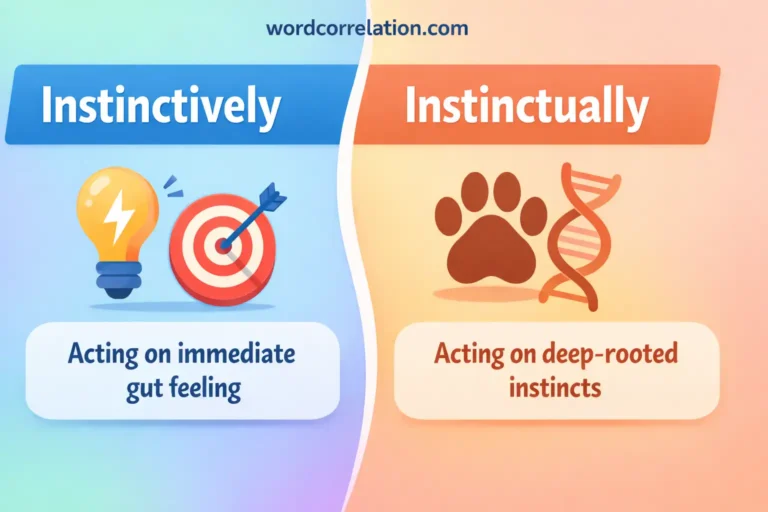
Have you ever wondered whether to use “instinctively” or “instinctually”? These two words sound similar, but they aren’t exactly the same. It’s easy to mix them up, but using the right one can make your writing clearer. In this article, we’ll explain the difference between them and show you when to use each one.
Both words come from the word instinct, which means a natural way of acting. But instinctively is the word you should use most of the time. It’s the common one, used by many people in everyday situations. Instinctually, on the other hand, is not used as much and is usually found in more serious or scientific writing.
By the end of this article, you’ll know exactly how to use instinctively and instinctually. You’ll never be confused again and will sound more natural in your writing. Let’s dive in and get started!
Instinctively vs Instinctually – Quick Answer
- Instinctively refers to actions done by nature or without thinking.
- Instinctually means something related to instinct but is used less frequently.
Decision rule: Use instinctively when describing an action or response that happens naturally or automatically. Use instinctually only in more technical or formal contexts when referring to things that are related to instinct, but not as commonly in everyday speech.
The Origin of Instinctively and Instinctually
Both “instinctively” and “instinctually” come from the word instinct, which has its roots in Latin. The word instinctus means a “driving force” or “impulse,” which fits with the idea of natural or innate behaviors.
- Instinctively: This word has been in use for centuries and is tied directly to actions done by instinct or natural behavior.
- Instinctually: This version is relatively newer and is often used in scientific or more academic contexts. It’s less common in everyday speech, which may be part of the confusion.
The reason for confusion today lies in the evolution of language. While both words are technically correct, instinctively has become the preferred choice in casual conversation, while instinctually often appears in more formal or scholarly texts.
British English vs American English Spelling
Both words, instinctively and instinctually, are spelled the same way in both British and American English. There is no difference in spelling between the two variations, so you can use either word in both types of English. However, remember that instinctively is the preferred option in most contexts.
Which Spelling Should You Use?
- For US English: Instinctively is the most commonly used form.
- For UK/Commonwealth English: Instinctively remains the preferred option, though you might encounter instinctually in scientific contexts.
- Global or professional writing: Stick to instinctively in most cases to avoid confusion.
If you’re unsure, default to instinctively, as it’s the more universally accepted term.
Common Mistakes with Instinctively vs Instinctually
Writers often confuse these two words because they sound similar and have nearly the same meaning. However, using the wrong one can make your writing sound awkward or overly formal when it doesn’t need to be. Here are some common mistakes:
❌ Incorrect: “She instinctually knew what to do.”
✅ Correct: “She instinctively knew what to do.”
❌ Incorrect: “His behavior was instinctually driven.”
✅ Correct: “His behavior was instinctively driven.”
The confusion typically arises because both words seem to imply the same thing: actions or behaviors that are driven by natural instincts. But as we’ve discussed, instinctively is the safer, more common choice.
Instinctively vs Instinctually in Everyday Examples
Emails
- Instinctively: “I instinctively clicked the link.”
- Instinctually: Rarely used in emails, but could appear in a formal or academic discussion, e.g., “The animal instinctually knew it needed to find shelter.”
News
- Instinctively: “The firefighter instinctively ran into the burning building.”
- Instinctually: More likely in scientific reports, e.g., “The species instinctually migrated during the winter.”
Social Media
- Instinctively: “He instinctively picked up his phone when it rang.”
- Instinctually: Not often used in casual posts, but could appear in educational posts: “The animal instinctually reacted to the threat.”
Formal or Professional Writing
- Instinctively: “The child instinctively reached for the food.”
- Instinctually: May be used in professional or technical contexts, e.g., “The response was instinctually triggered.”
Instinctively vs Instinctually – Usage Patterns & Search Interest
While both words are used, instinctively is far more common in everyday conversation and writing. Most people search for these words when they want to understand the subtle differences in meaning and usage. Here’s a typical user scenario:
- Students often get confused because they hear both words used in similar contexts, but instinctively is the preferred term.
- Writers may accidentally use instinctually when they mean instinctively.
- ESL learners often struggle because both words sound so similar.
Misusing these terms, especially in casual writing, can lead to awkward phrasing. For example, using instinctually instead of instinctively may make your sentence sound overly technical when it doesn’t need to be.
Comparison Table
| Aspect | Instinctively | Instinctually |
| Meaning | Done naturally or automatically. | Related to instinct, but less common. |
| Part of Speech | Adverb | Adverb |
| Context of Use | Everyday language, casual speech, etc. | Scientific or formal writing |
| Formal vs Informal Use | Informal, formal, and professional | Mostly formal or technical contexts |
| Common Mistakes | Often confused with instinctually | Misused when instinctively is needed |
| Correct Example | “He instinctively responded to the call.” | “The animal instinctually responded.” |
Semantic FAQs (People Also Ask)
- Is instinctively the same as instinctually?
- No, instinctively is more commonly used in everyday speech, while instinctually is reserved for more formal or scientific contexts.
- Which one is correct in formal writing?
- Instinctively is preferred in formal writing. Instinctually can be used in technical contexts.
- Can they be used interchangeably?
- Not always. It’s best to use instinctively for general use and reserve instinctually for specific contexts like academic writing.
- Why do people confuse them?
- Both words come from instinct and seem to mean similar things, but instinctively is the more natural and common choice.
- Can grammar tools catch this mistake?
- Some grammar tools may suggest instinctively over instinctually, but it’s important to understand the context to make the right choice.
- Is there a British vs American difference?
- No, both instinctively and instinctually are used the same in both British and American English, but instinctively is more common.
Conclusion
In summary, while instinctively and instinctually may seem like interchangeable terms, they are used in slightly different contexts. Instinctively is the preferred choice in everyday conversation, writing, and most professional settings. On the other hand, instinctually is used in more technical or academic contexts, though it is less common.
Rule to remember: Stick with instinctively for most situations, and use instinctually only when you’re writing in a formal or academic context. Avoid mixing them up, and your writing will be clear and precise!

Daniel Morris writes about English word differences and spelling confusion. His focus is to provide clear, simple explanations with practical usage examples.