Many people stop and think when they write mens or men’s. The confusion feels small. However, the mistake appears everywhere. Students make it. Bloggers make it. Even professionals miss it. Therefore, this topic needs a clear and simple answer. If you typed mens or men’s the correct form in standard English is men’s for possession.
The problem starts with one tiny mark. The apostrophe looks harmless. However, it changes meaning fast. As a result, readers may misunderstand your message. Moreover, grammar tools do not always warn you. Because of that, writers often repeat the same error.
People search for mens or men’s because they want certainty. They also ask about possessive form of men and the correct form is men’s. They want to sound correct. They want to avoid embarrassment. Additionally, they want clean writing for exams, emails, or websites. This article solves that problem step by step.
You will learn what each word means. You will see where mistakes happen. You will also learn which form to use and when. Finally, you will leave with one easy rule you can remember forever.
For apostrophe and form choices, the word comparison hub is a helpful guide.
Mens or Men’s – Quick Answer
Mens is incorrect The correct possessive form is men’s when something belongs to men
- Men’s shows ownership.
- Mens does not show ownership.
- Use men’s shoes for something owned by men.
- Use mens only in labels like menswear.
One apostrophe changes everything.
The Origin of Mens or Men’s
The word men comes from Old English. It simply means adult males. Over time, English added apostrophes to show ownership. Therefore, men’s became the possessive form.
However, mens did not develop as a true grammar form. Instead, it appeared in marketing and store labels. As a result, many people think both forms work the same way. In contrast, grammar rules say otherwise.
The confusion exists because spoken English sounds the same. Meanwhile, written English needs clarity. That difference causes repeated errors.
This belongs to our grammar rules pillar focused on correct apostrophe use.
British English vs American English Spelling
British and American English follow the same rule here. Therefore, there is no spelling difference.
| Aspect | British English | American English |
| Possessive form | men’s | men’s |
| Label usage | menswear | menswear |
| Common mistake | mens shoes | mens shoes |
However, usage style may vary. British stores often use menswear. American stores do the same. In contrast, formal writing always prefers men’s.
Which Spelling Should You Use?
The right choice depends on purpose. Therefore, think about context first.
For US writing:
Use men’s in sentences. Use mens only in brand labels.
For UK and Commonwealth:
The rule stays the same. Therefore, apostrophes still matter.
For global or professional writing:
Always choose men’s. Moreover, editors expect it.
If ownership exists, use men’s. Otherwise, avoid mens.
Common Mistakes with Mens or Men’s
These errors appear very often. However, they are easy to fix.
- ❌ mens shoes → ✅ men’s shoes
Explanation: Shoes belong to men. - ❌ mens clothing store → ✅ men’s clothing store
Explanation: The store sells clothing for men. - ❌ men shoe section → ✅ men’s shoe section
Explanation: The section serves men. - ❌ men’s wear label written as mens wear → ✅ menswear
Explanation: Labels combine words.
Always check for ownership. That step prevents mistakes.
Mens or Men’s in Everyday Examples
Correct usage depends on situation. Therefore, examples help a lot.
Emails:
Please visit the men’s restroom on the left.
News:
The brand launched a new men’s fashion line.
Social media:
Check out our men’s winter jackets today.
Professional writing:
The report covers trends in men’s health.
However, store signs may say menswear. That usage works as a label only.
Mens or Men’s – Google Trends & Usage Data
Search interest for mens or men’s stays high. Therefore, confusion is common.
- Students search it for exams.
- Writers search it for accuracy.
- ESL learners search it for clarity.
- Professionals search it for confidence.
Countries with high interest include the US, UK, India, and Australia. Moreover, most searches involve shopping terms. As a result, marketing language increases mistakes.
Correct usage grows in formal content. However, mistakes stay common in ads.
A closely related example is boys or boy’s.
Mens vs Men’s – Clear Comparison Table
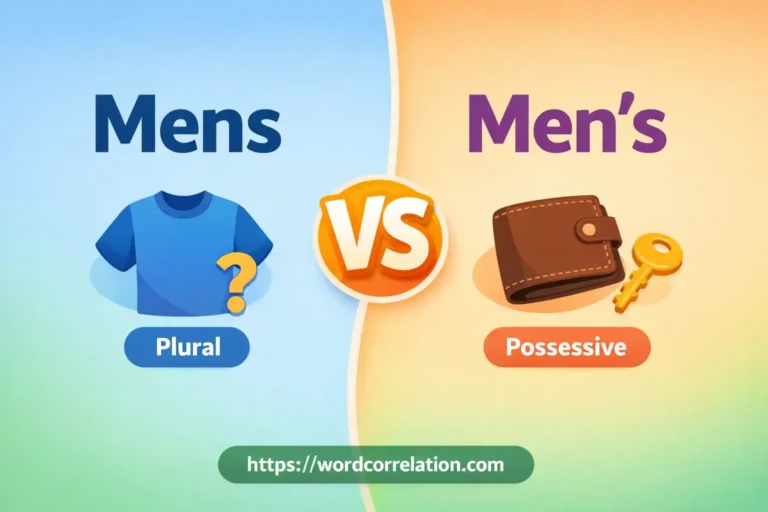
| Feature | Mens | Men’s |
| Meaning | Label or category | Ownership |
| Part of speech | Noun modifier | Possessive noun |
| Context of use | Stores, brands | Sentences |
| Formal usage | No | Yes |
| Common mistake | Used in sentences | Missing apostrophe |
| Correct example | menswear | men’s shoes |
This table removes confusion fast.
Semantic FAQs (People Also Ask)
Is mens the same as men’s?
No. Men’s shows ownership. Mens does not.
Which one is correct in formal writing?
Men’s is always correct.
Can they be used interchangeably?
No. Meaning changes completely.
Why do people confuse them?
Because spoken English sounds the same.
Can grammar tools catch this mistake?
Sometimes. However, manual checking works best.
Is there a British vs American difference?
No. Both follow the same rule.
Is mens correct
No mens is not correct in standard English writing the correct form is men’s.
What is the possessive form of men
The possessive form of men is men’s with an apostrophe.
If I searched men’s or mens what should I use
Use men’s because it shows possession and mens is generally considered incorrect.
Conclusion
Overall, mens or men’s confusion comes from one small mark. However, that mark carries big meaning. Men’s always shows ownership. Mens works only in labels like menswear. Therefore, context decides everything.
Writers often skip apostrophes. As a result, sentences look wrong. Moreover, readers may doubt your skill. That issue affects exams, blogs, and professional work.
Remember this simple rule. If something belongs to men, use men’s. If it is a store label, mens may appear. Finally, when in doubt, choose men’s. That choice keeps your writing clear and correct.
If you want the broader rule, check plural or possessive.

Daniel Morris writes about English word differences and spelling confusion. His focus is to provide clear, simple explanations with practical usage examples.