
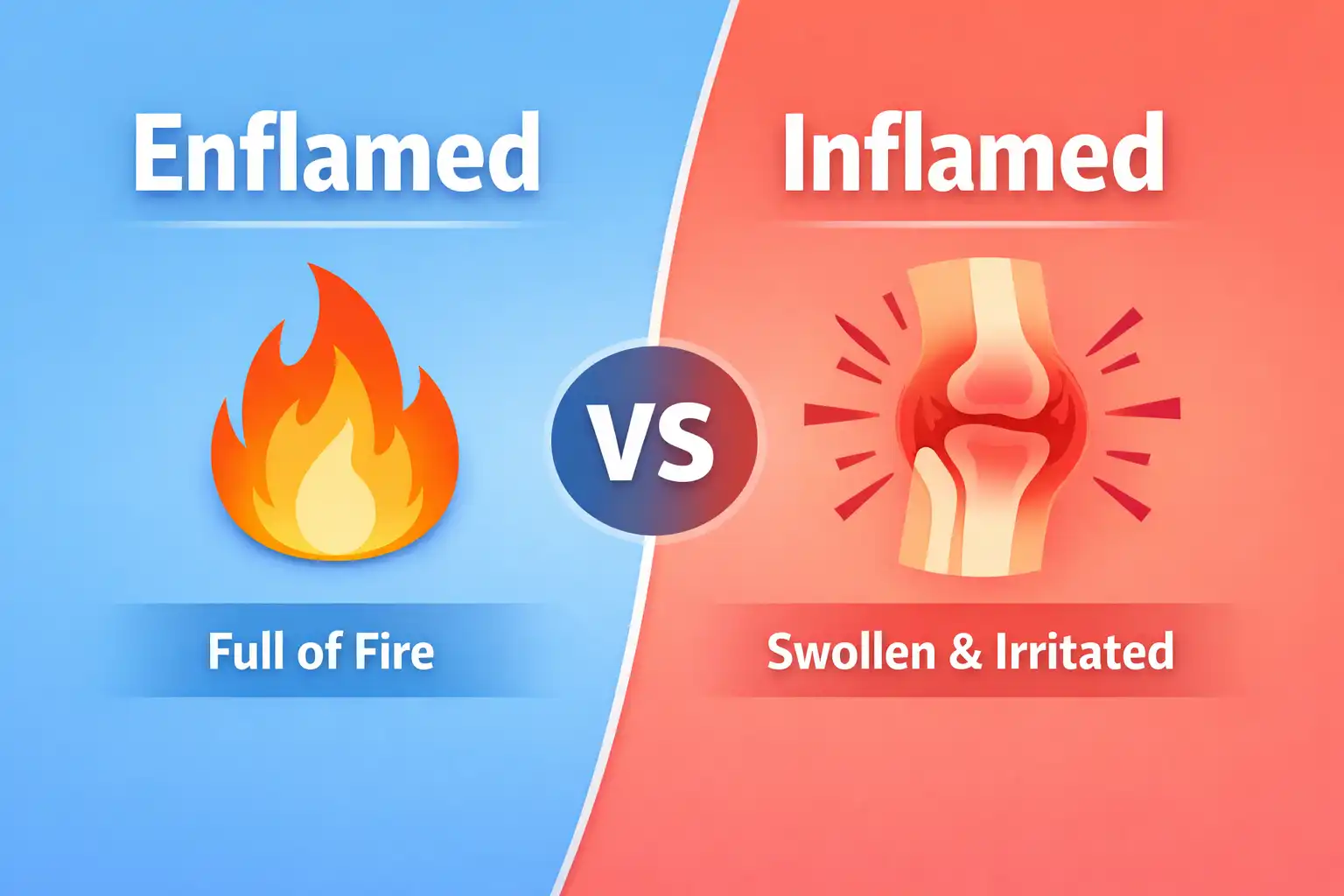
People often pause when they see enflamed or inflamed. Both look correct. Both sound similar. So confusion feels natural. Many writers, students, and even editors mix them up in emails, essays, and posts.
Now the real issue starts here. One word is standard. The other is rare and often seen as incorrect. So using the wrong one can make your writing look weak or outdated. This matters in school, work, and online content. This word comparison explains the correct medical term.
In this guide, you will learn the real difference. You will also see when to use each word. Plus, you will get simple rules that remove confusion fast.
Enflamed or Inflamed – Quick Answer
Inflamed is the correct and common word.
Enflamed exists but is rare and often avoided.
- Inflamed = swollen, red, or emotional
- Enflamed = old or less common form
Examples:
- Her throat is inflamed.
- His words inflamed the crowd.
👉 Easy rule: Use inflamed in almost all cases.
Meaning of Inflamed
- Means something is swollen, red, or irritated
- Also means strong emotions like anger
Examples:
- My skin feels inflamed after the sun.
- The speech inflamed public anger.
Meaning of Enflamed
- Means to set on fire or excite strongly
- Rare in modern writing
Examples:
- The speech enflamed the crowd.
- Old texts may use this form
👉 Simple tip: If unsure, always choose inflamed.
The Origin of Enflamed or Inflamed
The story begins with Latin roots. The word inflamed comes from inflammare, which means “to set on fire.” Over time, it entered English through French. Writers used it for both physical and emotional heat.
However, enflamed appeared later. It formed by adding the prefix “en-,” which also suggests causing something. This made both words look similar in meaning.
Now here is the key point. Language evolved, but usage did not stay equal. Writers slowly preferred inflamed because it felt simpler and more standard.
Today, most dictionaries list inflamed as the correct and common choice. Meanwhile, enflamed survives mostly in older texts or poetic writing.
Writers often confuse them because both suggest heat or strong feeling. But modern English clearly favors one over the other. Learn the differences in UK vs US spelling here.
British vs American English Spelling
There is no major difference between British and American English for these words. Both regions prefer inflamed.
| Aspect | Inflamed | Enflamed |
| US English | Common | Rare |
| UK English | Common | Rare |
| Modern usage | Standard | Uncommon |
However, in contrast to spelling differences like color vs colour, this pair does not change by region.
Examples:
- US: The area is inflamed.
- UK: The area is inflamed.
So the rule stays simple across the world.
How to Choose the Right Word Fast
Choosing the right word should feel easy. You do not need to overthink.
For US readers:
Use inflamed in all writing.
For UK and Commonwealth users:
Use inflamed as well.
Global or professional writing:
Stick with inflamed to stay clear and correct.
Now here is the key idea. Enflamed is not wrong, but it feels outdated. Many readers may see it as a mistake.
👉 Fast rule: If you want safe, clear English, always use inflamed.
Common Mistakes with Enflamed or Inflamed
Writers make small but important errors with these words. Let’s fix them.
❌ Incorrect: My eyes are enflamed
✅ Correct: My eyes are inflamed
❌ Incorrect: The news enflamed her skin
✅ Correct: The news inflamed her emotions
Now notice the pattern. Most mistakes come from overusing enflamed.
Editors usually see this error in essays and blogs. It happens because people assume both words are equal. But they are not.
Enflamed or Inflamed in Real Life Examples
Understanding real usage helps more than definitions.
Emails:
- The report shows inflamed tissue.
- His message inflamed the situation.
News:
- The protest inflamed public anger.
- Doctors found inflamed lungs.
Social media:
- This debate is getting inflamed.
- My skin feels inflamed today.
Professional writing:
- The condition causes inflamed joints.
- The speech inflamed political tension.
Here, you can see one clear trend. Almost all modern writing uses inflamed.
Enflamed or Inflamed – Word Usage Patterns and Search Trends
Search trends show a strong preference for inflamed. Most users type this word when searching about health or emotions.
Students often search this keyword because they feel unsure. ESL learners also struggle with it due to similar spelling.
Writers and bloggers face this issue too. They want to sound correct but hesitate between the two forms.
Now consider a real situation. A medical blog uses “enflamed skin” instead of “inflamed skin.” Readers may lose trust because the word looks incorrect. You may also read rehireable or rehirable.
So correct usage is not just grammar. It affects clarity and credibility.
Comparison Table: Enflamed vs Inflamed
| Feature | Inflamed | Enflamed |
| Meaning | Swollen or emotional | Set on fire or excite |
| Part of speech | Adjective / verb | Verb (rare use) |
| Usage | Modern and standard | Rare and outdated |
| Context | Medical, emotional, general | Literary or old texts |
| Formal use | Accepted | Not preferred |
| Common mistake | None | Used instead of inflamed |
| Example | Her skin is inflamed | The speech enflamed the crowd |
This table shows one clear truth. Inflamed is the safer and correct choice in almost all cases.
Semantic FAQs
Is enflamed the same as inflamed?
No. They share similar roots, but inflamed is standard while enflamed is rare.
Which one is correct in formal writing?
Use inflamed. It is accepted in all formal contexts.
Can they be used interchangeably?
Not really. While meanings overlap, modern English prefers inflamed.
Why do people confuse them?
Both words come from similar roots and look alike. This causes easy mix-ups.
Can grammar tools catch this mistake?
Some tools may not flag it. So manual awareness helps more.
Is there a British vs American difference?
No. Both regions use inflamed.
Is enflamed wrong?
It is not fully wrong, but it feels outdated and uncommon today.
Conclusion
The confusion between enflamed or inflamed is common, but the solution is simple. Both words share similar roots and meanings, yet modern English clearly favors one.
Inflamed works in all cases. You can use it for health, emotions, and general writing. It sounds natural and correct across the world. On the other hand, enflamed appears rarely and may confuse readers.
Writers often make the mistake of using enflamed when they want to sound formal. But this can backfire. It may make writing look old or incorrect. Another related topic is unsecure vs insecure.
Overall, the best approach is to stay clear and simple. Choose the word that most readers understand instantly.
Finally, remember this easy rule:
👉 If you feel unsure, always use inflamed.

Ibrahim Jhon is an English language editor with over ten years of experience working with writers, publishers, and international businesses. He specialises in word choice, grammar accuracy, and the differences between British and American English.