
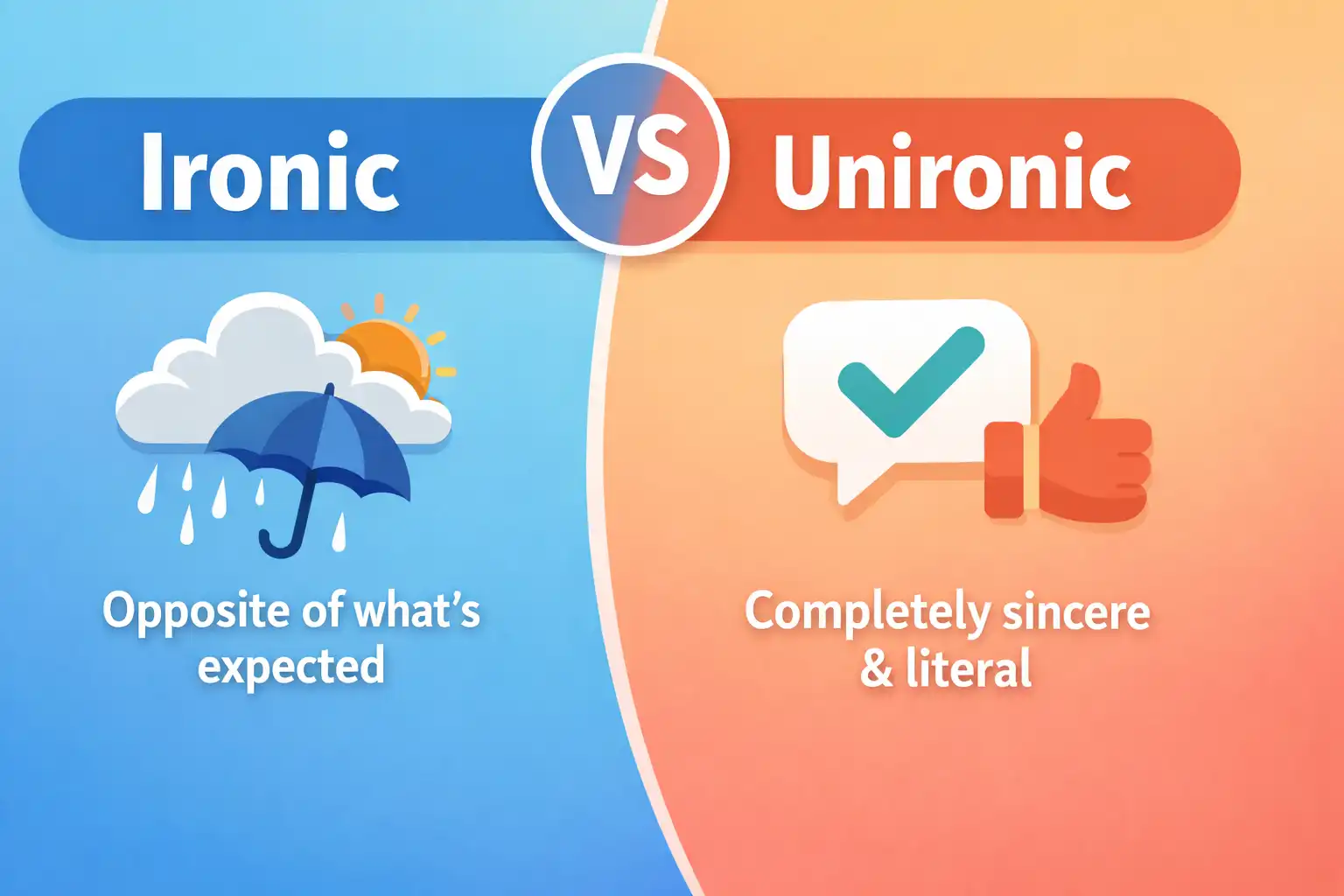
Title: Ironic vs Unironic Explained Simply for Daily Use
Ironic vs unironic can feel confusing at first. Many people see these words online, especially in memes, comments, and jokes. Yet they are not sure what they truly mean. Some even use them the wrong way, which changes the whole message.
This confusion matters because tone is important. A sentence can sound funny, serious, or even rude depending on how you use these words. Writers often mix them up, and readers then misunderstand the intent. That can lead to awkward moments in chats, emails, or social media posts. This word comparison clarifies meaning differences.
So, this guide will make things clear. You will learn the real meaning of ironic and unironic. You will also see how to use them in daily life without mistakes. By the end, you will know exactly when to use each word and how to avoid common errors.
Ironic vs Unironic – Quick Answer
Meaning of Ironic
- Shows a contrast between what is expected and what happens
- Often used for humor or sarcasm
- Example: “A fire station burned down. That is ironic.”
Meaning of Unironic
- Means something is genuine, serious, or not joking
- No hidden humor or sarcasm
- Example: “He said it unironic, so he really meant it.”
Easy rule:
Use ironic for contrast or hidden humor. Use unironic when something is real and serious.
The Origin of Ironic vs Unironic
The word ironic comes from the Greek word “eironeia.” It means dissembling or pretending. Over time, it became linked to situations where reality does not match expectations. For example, rain on a picnic day feels ironic because it ruins the plan.
On the other hand, unironic is a newer word. It formed by adding “un-” to ironic. This prefix means “not.” So, unironic simply means “not ironic.” It became popular in modern internet culture. People use it to show that something is sincere, not a joke.
However, confusion grew because ironic already has many meanings. Some people think it just means “funny,” which is not always true. Meanwhile, unironic sounds similar but carries the opposite tone. This mix often leads to misuse, especially in casual writing.
British vs American English Spelling
There is no spelling difference between ironic and unironic in British and American English. Both forms stay the same.
| Region | Spelling |
|---|---|
| US | ironic / unironic |
| UK | ironic / unironic |
So, the focus is not spelling but meaning and tone. Writers in both regions use these words in the same way.
How to Choose the Right Word Fast
Choosing between ironic and unironic is simple once you know the tone.
- US audience: Clear tone matters. Use ironic for humor or contrast. Use unironic for sincerity.
- UK / Commonwealth: Same rule applies. Tone stays key.
- Global writing: Keep it simple. Avoid overusing ironic unless contrast is clear. Also review unpure or impure.
If there is no contrast or hidden meaning, then do not use ironic. Instead, use unironic or just say “serious” or “genuine.”
Common Mistakes with Ironic vs Unironic
Many writers misuse these words. Here are common errors:
❌ Incorrect: “That joke was ironic and funny.”
✅ Correct: “That joke was sarcastic and funny.”
Explanation: Ironic does not always mean funny.
❌ Incorrect: “He said it ironic, so he was serious.”
✅ Correct: “He said it unironic, so he was serious.”
Explanation: Unironic shows sincerity.
❌ Incorrect: “It is ironic that I like pizza.”
✅ Correct: “I like pizza.”
Explanation: There is no contrast, so ironic is wrong.
Writers often overuse ironic because it sounds smart. But clarity is more important than style.
Ironic vs Unironic in Real Life Examples
Here is how these words appear in real situations:
Emails:
- “It is ironic that the backup system failed first.”
- “I say this unironic: we need better planning.”
News:
- “The safety expert forgot his helmet. It was ironic.”
- “The leader gave an unironic apology to the public.”
Social Media:
- “I wore a winter jacket in summer. So ironic.”
- “I unironic love this song.”
Professional Writing:
- “The result was ironic given the initial goal.”
- “Her statement was unironic and direct.”
These examples show how tone changes meaning.
Ironic vs Unironic – Word Usage Patterns and Search Trends
People search for ironic vs unironic because they see these words often online. Students and ESL learners want clear meanings. Writers also check usage to avoid mistakes.
Ironic is more common in books and news. Unironic appears more in internet culture and social media. Many users learn it from memes and online discussions.
One real issue happens when someone uses ironic wrongly in professional writing. For example, calling a normal event ironic can confuse readers. It may even reduce trust in the message. Explore UK vs US for tone usage differences.
So, correct usage helps clear communication and avoids misunderstanding.
Ironic vs Unironic Comparison Table
| Feature | Ironic | Unironic |
|---|---|---|
| Meaning | Contrast between expectation and reality | Genuine, serious, no hidden meaning |
| Part of Speech | Adjective | Adjective |
| Context | Humor, sarcasm, unexpected outcomes | Honest statements, sincerity |
| Formal vs Informal | Used in both, but often informal tone | Mostly informal but growing in use |
| Common Mistake | Used for anything funny | Confused with ironic |
| Correct Example | “It rained on my sunny trip. Ironic.” | “I unironic enjoy this book.” |
This table makes the difference clear at a glance.
FAQs About Ironic vs Unironic
Is ironic the same as unironic?
No. Ironic shows contrast or humor. Unironic shows sincerity.
Which one is correct in formal writing?
Ironic is more common. Unironic is less formal but still accepted.
Can they be used interchangeably?
No. They have opposite meanings.
Why do people confuse them?
Because ironic has many meanings and unironic is newer.
Can grammar tools catch this mistake?
Sometimes, but not always. Tone errors are hard to detect.
Is there a British vs American difference?
No. Both words are used the same way.
Is unironic a real word?
Yes. It is widely used, especially online.
Conclusion
Ironic vs unironic becomes easy once you focus on tone. Ironic shows a mismatch between what you expect and what happens. It often carries humor or surprise. Unironic, however, means something is real, honest, and not a joke.
Many people make the mistake of using ironic for anything funny. That is not correct. Without contrast, ironic does not fit. Instead, use simple words or choose unironic when you mean sincerity.
Overall, clear communication depends on using the right word. If you remember one rule, keep this in mind:
Use ironic for contrast, and use unironic for truth without humor. Another useful guide is unauthorised or unauthorized.
This simple idea will help you avoid confusion and write with confidence.

Ibrahim Jhon is an English language editor with over ten years of experience working with writers, publishers, and international businesses. He specialises in word choice, grammar accuracy, and the differences between British and American English.