Many people search for twinning or twining because these two words look almost the same. However, their meanings are very different. As a result, writers often mix them up in emails, homework, blogs, and even professional documents. Moreover, spellcheck tools do not always catch this mistake. Therefore, confusion stays common, especially for students and non-native English users.
In daily writing, this small error can change the whole meaning of a sentence. For example, one word talks about matching things, while the other describes a twisting action. Because of this, readers may feel confused or misled. Meanwhile, teachers and editors often mark this error quickly.
This article solves that exact problem. First, it explains what twinning and twining really mean. Then, it shows how each word works in real life. Additionally, it highlights common mistakes and how to avoid them. Finally, it gives you one easy rule to remember forever. Overall, after reading this guide, you will feel confident using the correct word every time.
To compare similar-looking words with different meanings, use the word comparison hub.
Twinning or Twining – Quick Answer
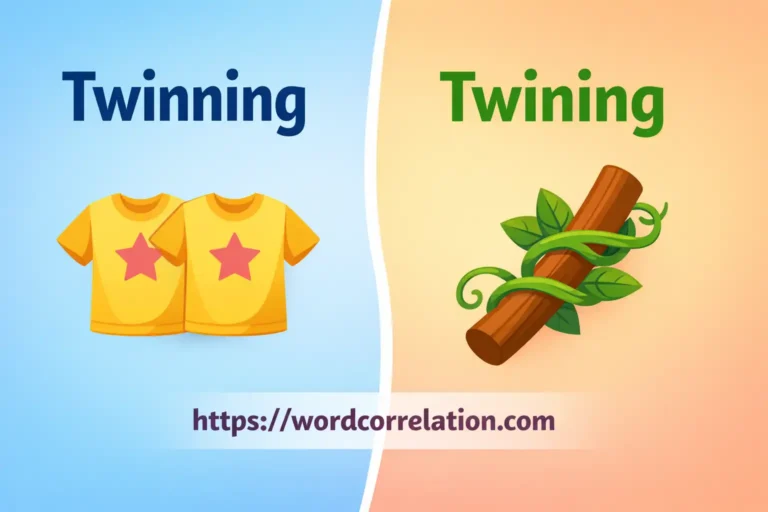
Twinning means matching or pairing things together.
Twining means twisting or winding around something.
- Twinning outfits look the same.
- A vine is twining around a pole.
In short, twinning = matching, while twining = twisting.
The Origin of Twinning or Twining
The history of these words explains the confusion very clearly. Twinning comes from the word twin. Therefore, it always connects to pairs, doubles, or things that look alike. In old English, people used it to describe births, towns, or objects that matched.
On the other hand, twining comes from the verb to twine. That verb means to twist or coil. As a result, this word often appears in nature, plants, ropes, or physical movement.
Because both words sound similar, many people assume they share the same meaning. However, their roots show they describe totally different actions. Understanding this origin helps writers choose the correct word with confidence.
This pair belongs in our word confusion pillar for commonly mixed terms.
British English vs American English Spelling
Spelling differences often confuse writers. However, twinning and twining are not a British or American spelling issue. Instead, both forms are correct in all English varieties.
| Aspect | Twinning | Twining |
|---|---|---|
| English type | US & UK | US & UK |
| Spelling change | None | None |
| Meaning change | No | No |
In contrast to words like color and colour, these two words keep the same spelling everywhere. Therefore, location does not affect your choice. Meaning always decides the correct word.
Which Spelling Should You Use?
Choosing the right word depends on your audience and message. Therefore, focus on meaning, not region.
For US writers, use twinning when talking about matching clothes, cities, or ideas. Meanwhile, choose twining when describing movement or shape.
For UK and Commonwealth users, the rule stays the same. However, formal writing expects correct meaning even more strongly.
For global or professional writing, clarity matters most. As a result, using the wrong word may hurt trust. Always check whether you mean matching or twisting before publishing.
Common Mistakes with Twinning or Twining
Writers make a few repeat errors with these words. Luckily, each mistake has a simple fix.
❌ The plants are twinning around the fence.
✅ The plants are twining around the fence.
❌ They posted a photo of their twining outfits.
✅ They posted a photo of their twinning outfits.
❌ The rope is twinning tightly.
✅ The rope is twining tightly.
Most errors happen because people rely on sound, not meaning. Therefore, always pause and check the action in your sentence.
Twinning or Twining in Everyday Examples
Real examples make learning easier. Therefore, look at how these words appear in daily life.
In emails, someone may write:
We loved your twinning presentation ideas.
On social media, people often post:
Sibling twinning today!
In news articles, writers may say:
The cities announced a twinning agreement.
In professional writing, you might see:
The vine is twining around the support beam.
Each example shows clear meaning. As a result, readers instantly understand the message.
Twinning or Twining – Google Trends & Usage Data
Search behavior shows why confusion exists. Twinning appears more in lifestyle content, fashion posts, and city planning topics. Meanwhile, twining shows up in gardening, biology, and craft writing.
By country, searches stay high in English-learning regions. Additionally, students and ESL learners search this pair very often. Professionals search less, yet mistakes still appear in drafts.
Correct usage increases with education level. However, common mistakes remain frequent online. Therefore, clear guides like this one stay very valuable. Another related mix-up is intertwined or entwined.
Comparison Table: Twinning vs Twining
| Feature | Twinning | Twining |
|---|---|---|
| Meaning | Matching or pairing | Twisting or winding |
| Part of speech | Verb / noun | Verb |
| Context of use | Fashion, cities, ideas | Plants, ropes, movement |
| Formal vs informal | Both | Both |
| Common mistakes | Used for twisting | Used for matching |
| Correct example | They wore twinning jackets. | The vine is twining upward. |
This table removes confusion instantly. As a result, quick reference becomes easy.
Semantic FAQs (People Also Ask)
Is twinning the same as twining?
No. Twinning means matching. Twining means twisting.
Which one is correct in formal writing?
Both are correct when used with the right meaning.
Can they be used interchangeably?
No. Each word describes a different action.
Why do people confuse them?
They sound similar and look almost the same.
Can grammar tools catch this mistake?
Sometimes. However, manual checking works better.
Is there a British vs American difference?
No. Both spellings stay the same worldwide.
Conclusion
Overall, twinning or twining confusion comes from sound, not spelling. One word talks about matching things, while the other describes twisting motion. Therefore, choosing the wrong word can change your meaning completely. Many writers make this mistake in casual and professional content alike. You may also like title or tittle for a similar-looking pair.
In short, always ask one simple question before writing. Are you describing things that look the same, or are you showing something that twists or wraps? If matching is the idea, use twinning. If movement or coiling appears, choose twining.
Finally, remember this easy rule: Twin = two that match. Twine = twist around.
Follow that rule, and this mistake will never happen again.

Daniel Morris writes about English word differences and spelling confusion. His focus is to provide clear, simple explanations with practical usage examples.