
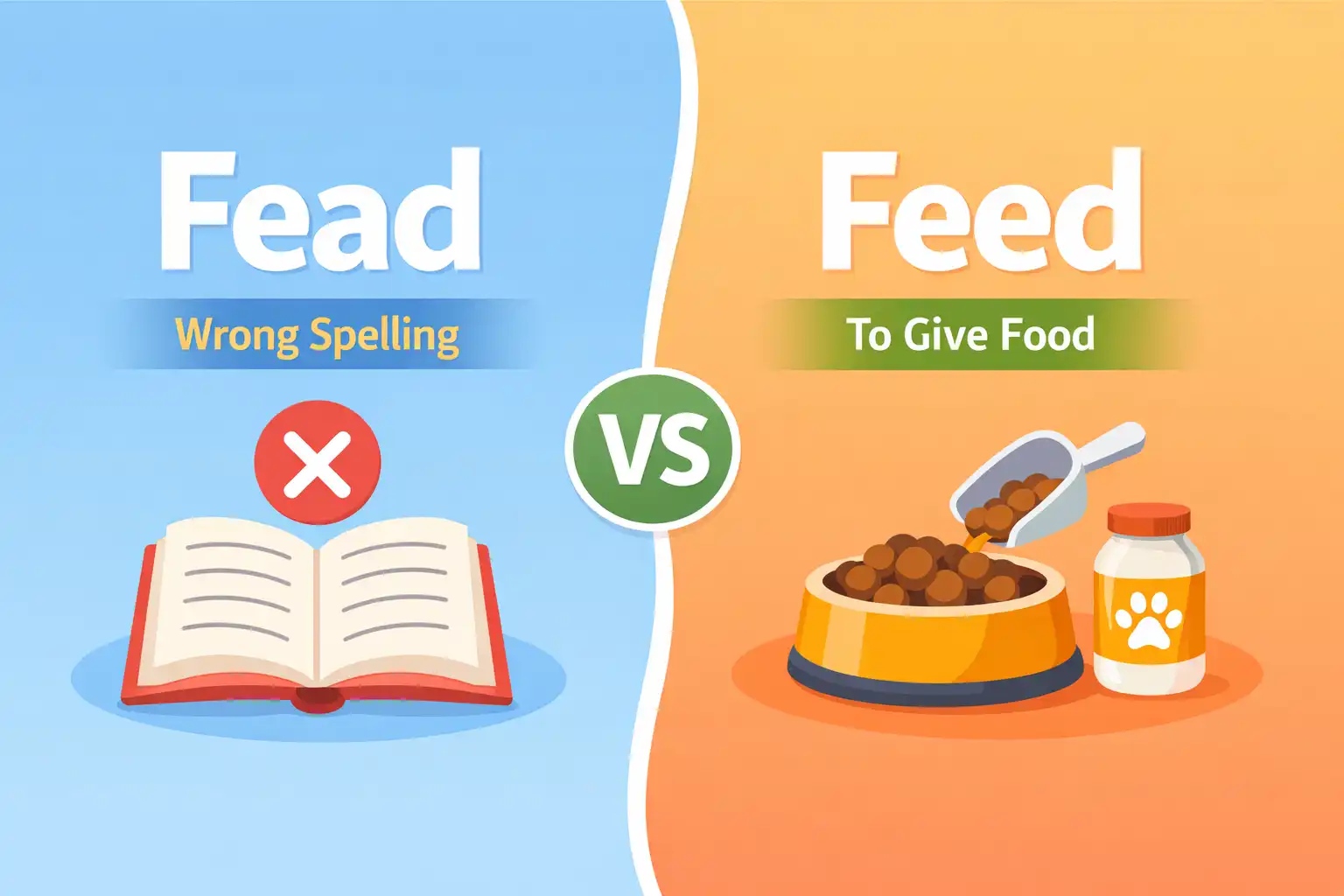
Many people search “fead or feed” because they see both forms online and feel unsure which one is right. This confusion often appears in quick typing, social media posts, or when learning English as a second language. A small spelling mistake can change how your writing looks, and it may affect clarity and trust.
So, what is the real issue here? The truth is simple, but many learners miss it. One word is correct and widely used. The other is not a real standard word in English. In this guide, you will learn the correct spelling, why the confusion happens, and how to use the right word every time. You will also see real examples and common mistakes so you can avoid errors with confidence.
Fead or Feed – Quick Answer
- Feed is the correct English word.
- Fead is a spelling mistake and not used in standard English.
Meaning of Feed
- To give food to a person or animal
- To supply or provide something
Examples:
- She feeds the cat every morning.
- The app shows a news feed.
Meaning of Fead
- No accepted meaning in English
- Often a typo for “feed”
👉 Easy rule: Always use feed. Avoid fead in all contexts.
The Origin of Fead or Feed
The word feed comes from Old English fēdan, which means “to nourish” or “to give food.” Over time, it kept a similar meaning and became common in daily language. Today, people use it in many ways, such as feeding animals, sharing data, or showing content online.
However, “fead” has no historical root in English. It likely appears because of typing errors or confusion with similar-looking words. For example, some learners mix vowel sounds or type quickly and press the wrong key.
Writers often confuse these forms because English spelling does not always match pronunciation. Also, autocorrect may not always fix rare typos. As a result, “fead” appears online, even though it is incorrect.
British vs American English Spelling
There is no difference between British and American English for this word. Both use feed as the correct spelling.
| Aspect | British English | American English |
| Correct spelling | Feed | Feed |
| Incorrect form | Fead | Fead |
| Usage | Same meaning | Same meaning |
So, whether you write for the US, UK, or global readers, the rule stays the same.
How to Choose the Right Word Fast
Choosing the correct word here is very easy because there is only one valid option.
- US users: Always use feed
- UK and Commonwealth users: Also use feed
- Global writing: Use feed in all cases
There is no variation in spelling or tone. If you see “fead,” treat it as an error and replace it with “feed.”
Common Mistakes with Fead or Feed
Writers often make small mistakes with spelling, especially when typing fast. Here are some common errors:
❌ Check your social media fead.
✅ Check your social media feed.
❌ The system feads data to users.
✅ The system feeds data to users.
These mistakes happen because “ea” is a common vowel pair in English. Still, the correct pattern here is always ee, not ea.
Fead or Feed in Real Life Examples
You will see the word “feed” in many real situations. Let’s look at how it works in daily use.
Emails
- Please feed the data into the system before noon.
News
- The live feed shows events in real time.
Social Media
- My Instagram feed is full of travel photos.
Professional Writing
- The company uses an RSS feed to share updates.
In each case, “feed” means to supply, provide, or display something. The meaning may change slightly based on context, but the spelling never changes.
Fead or Feed – Word Usage Patterns and Search Trends
The word “feed” is very common. People use it in both simple and technical contexts. Students, writers, and professionals all use it daily. It appears in areas like technology, media, and everyday speech.
On the other hand, “fead” shows up mostly in search queries or informal writing. It often signals confusion or a typing error. Search trends suggest that users look up “fead or feed” because they want to confirm the correct spelling.
One real-world issue happens in professional emails. If someone writes “fead,” it may look careless. This can affect how others see the message. So, correct spelling matters for clear and professional communication.
Comparison Table: Fead vs Feed
| Feature | Feed | Fead |
| Meaning | To give food or supply something | No meaning |
| Part of Speech | Verb and noun | Not valid |
| Context of Use | Daily life, tech, media | Typo only |
| Formal vs Informal | Used in both | Never used |
| Common Mistakes | Rare | Very common typo |
| Correct Example | She feeds the baby. | ❌ Not correct |
This table makes it clear: only “feed” is correct.
FAQs About Fead or Feed
Is fead the same as feed?
No. “Fead” is incorrect. “Feed” is the right word.
Which one is correct in formal writing?
Only “feed” is correct in all formal writing.
Can they be used interchangeably?
No. “Fead” should not be used at all.
Why do people confuse them?
They mix vowel sounds or make typing errors.
Can grammar tools catch this mistake?
Most tools catch it, but not always. Manual checking helps.
Is there a British vs American difference?
No. Both use “feed” the same way.
Is “feed” always a verb?
No. It can also be a noun, like “news feed.”
Conclusion
The confusion between “fead or feed” is common, but the solution is simple. Only feed is correct, and it has a clear meaning in English. It works as both a verb and a noun, and people use it in many real-life situations.
On the other hand, “fead” is just a spelling mistake. It has no meaning, no history, and no correct usage. Writers often make this error due to fast typing or vowel confusion. Still, it is easy to fix once you know the rule.
Overall, always choose “feed” in every context. Avoid using “fead,” even in casual writing. This small change can improve clarity and make your writing look more professional.
Finally, remember this simple rule:
👉 If you mean to give food or supply something, always write feed.

Ibrahim Jhon is an English language editor with over ten years of experience working with writers, publishers, and international businesses. He specialises in word choice, grammar accuracy, and the differences between British and American English.