
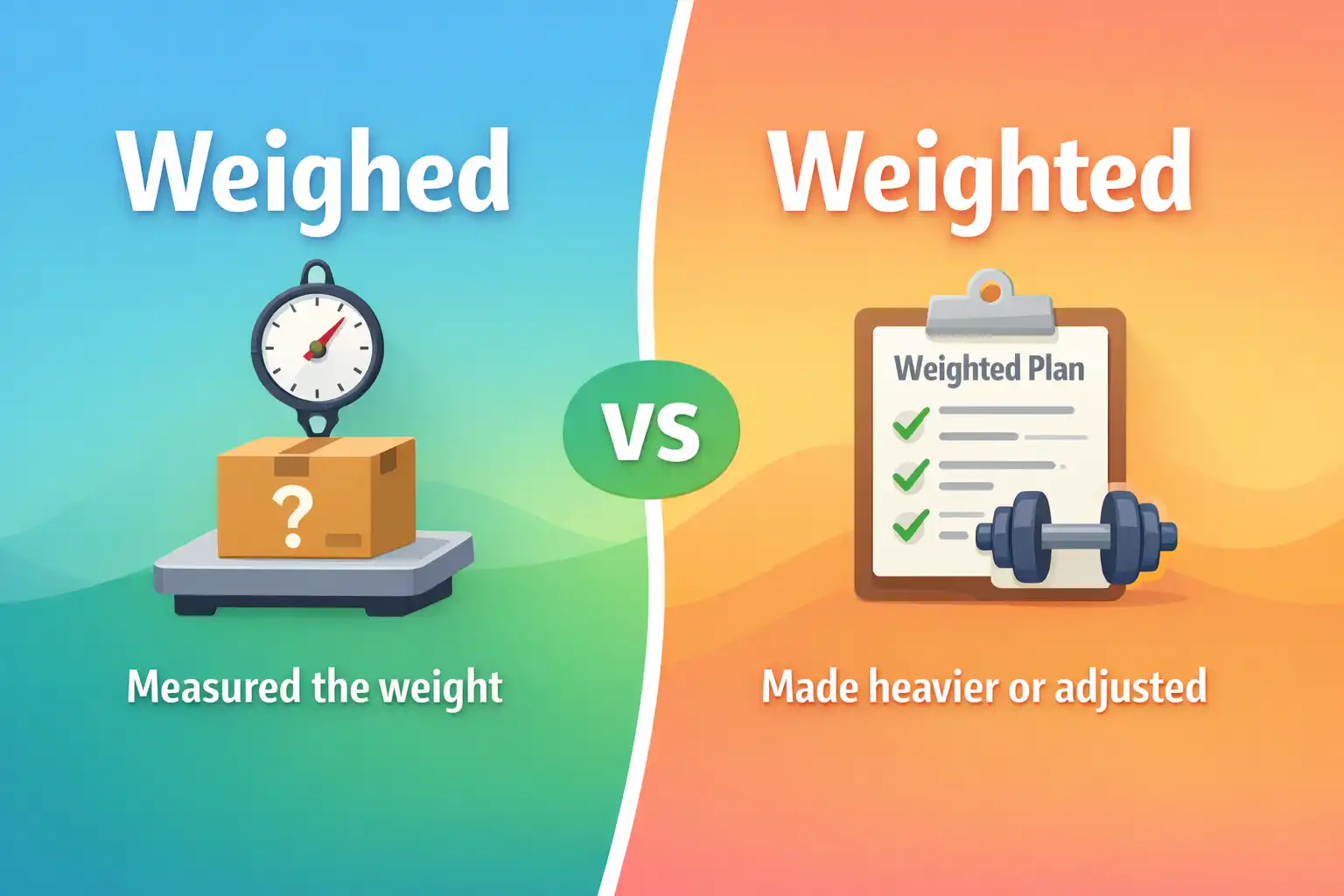
When you see “weighed vs weighted,” it can feel tricky. Both words look almost the same. Both come from the verb weigh. Yet they do very different jobs in real writing. Many learners, students, and even writers mix them up in emails, essays, and reports.
This confusion matters. If you use the wrong word, your sentence can sound odd or even wrong. For example, saying “I weighted the bag” instead of “I weighed the bag” changes the meaning. Small mistakes like this can affect clarity, especially in professional or academic writing.
In this guide, you will learn the exact difference between weighed and weighted. You will also see when to use each one, how to avoid common mistakes, and how real people use them in daily life. So, let’s make this simple and clear.
Weighed vs Weighted – Quick Answer
Meaning of Weighed
- Past tense of weigh
- Means to measure weight or think carefully
- Example: “She weighed the apples.”
Meaning of Weighted
- Adjective or verb form meaning “given extra importance”
- Example: “The test is weighted more on math.”
Easy Rule:
Use weighed for measuring or thinking. Use weighted for importance or balance.
The Origin of Weighed vs Weighted
Both words come from the same root word: weigh. This word comes from Old English “wegan,” which means to carry or measure weight.
Over time, English created different forms:
- Weighed became the simple past tense. It shows an action already done.
- Weighted developed as a descriptive form. It shows something adjusted or balanced by adding importance or weight.
Writers often confuse them today because they look similar. Also, both relate to “weight,” but in different ways. One is about action. The other is about condition or importance.
British vs American English Spelling
There is no spelling difference between British and American English for these words. Both use:
- Weighed
- Weighted
However, the confusion is about usage, not spelling.
Here is a quick comparison:
| Aspect | Weighed | Weighted |
| Type | Verb (past) | Adjective / verb |
| Meaning | Measured or considered | Adjusted with importance |
| Example | He weighed the box | The score is weighted |
In contrast to many English words, these do not change by region. So, the focus should stay on correct meaning.
How to Choose the Right Word Fast
Choosing between weighed and weighted is simple once you know the purpose.
For US users
Use weighed when you talk about measuring or thinking. Use weighted when talking about scores, systems, or importance.
For UK / Commonwealth users
The rule stays the same. No spelling change exists. Focus only on meaning.
For global or professional writing
Clarity matters most. So, check your sentence:
- If it shows an action → use weighed
- If it shows importance or balance → use weighted
Now you can pick the correct word quickly without doubt.
Common Mistakes with Weighed vs Weighted
Writers often mix these words in simple sentences. Here are common errors:
❌ Incorrect: I weighted the fruit at the market
✅ Correct: I weighed the fruit at the market
Explanation: You are measuring, so use weighed
❌ Incorrect: The exam was weighed more on science
✅ Correct: The exam was weighted more on science
Explanation: This talks about importance, so use weighted
These small changes make your writing clear and correct.
Weighed vs Weighted in Real Life Examples
Let’s see how people use these words in daily writing.
Emails
“I weighed the package before sending it.”
“The final grade is weighted toward the final exam.”
News
“The company weighed its options before closing the deal.”
“The index is weighted based on market size.”
Social Media
“I finally weighed myself after a month!”
“This game feels weighted toward skilled players.”
Professional Writing
“The committee weighed all proposals carefully.”
“The scoring system is weighted for accuracy.”
These examples show real usage, so you can understand them better.
Weighed vs Weighted – Word Usage Patterns and Search Trends
Many learners search “weighed vs weighted” because both words appear in school, work, and daily speech. Students often face this in exams. ESL learners struggle because both forms come from the same root.
Writers often confuse them when editing fast. Editors usually see this mistake in essays and reports.
In real life, misuse can cause confusion. For example, in a report:
- “The data was weighed” sounds like someone measured it physically
- “The data was weighted” means values were adjusted
This difference is important in academic and professional settings.
Comparison Table: Weighed vs Weighted
| Feature | Weighed | Weighted |
| Meaning | Measured or considered | Given extra importance |
| Part of Speech | Verb (past tense) | Adjective / verb |
| Context of Use | Physical weight or thinking | Systems, scoring, importance |
| Formal vs Informal | Used in both | Used in both |
| Common Mistake | Used instead of weighted in scoring | Used instead of weighed in measuring |
| Correct Example | She weighed the baby | The test is weighted |
This table makes the difference clear at a glance.
FAQs About Weighed vs Weighted
Is weighed the same as weighted?
No. Weighed means measured or considered. Weighted means given importance.
Which one is correct in formal writing?
Both are correct. Use them based on meaning, not formality.
Can they be used interchangeably?
No. They have different meanings and cannot replace each other.
Why do people confuse them?
They look similar and come from the same root word.
Can grammar tools catch this mistake?
Sometimes. However, tools may miss it if the sentence looks correct.
Is there a British vs American difference?
No. Both forms stay the same in all English varieties.
What is the easiest way to remember the difference?
Think: weighed = action, weighted = importance.
Conclusion
Understanding weighed vs weighted becomes easy once you focus on meaning. Weighed is about action. It shows that something was measured or carefully considered. Weighted, on the other hand, shows importance, balance, or added value in a system.
Writers often mix them because they look alike. However, the difference is clear when you check the purpose of your sentence. If you are talking about measuring or thinking, use weighed. If you are talking about importance or adjustment, use weighted.
Overall, the biggest mistake to avoid is using weighted when you mean simple measurement. This error appears often in everyday writing.
Finally, remember this simple rule:
If you can replace it with “measured” or “considered,” use weighed. If you can replace it with “adjusted for importance,” use weighted.
Keep this in mind, and your writing will stay clear and correct.

Ibrahim Jhon is an English language editor with over ten years of experience working with writers, publishers, and international businesses. He specialises in word choice, grammar accuracy, and the differences between British and American English.